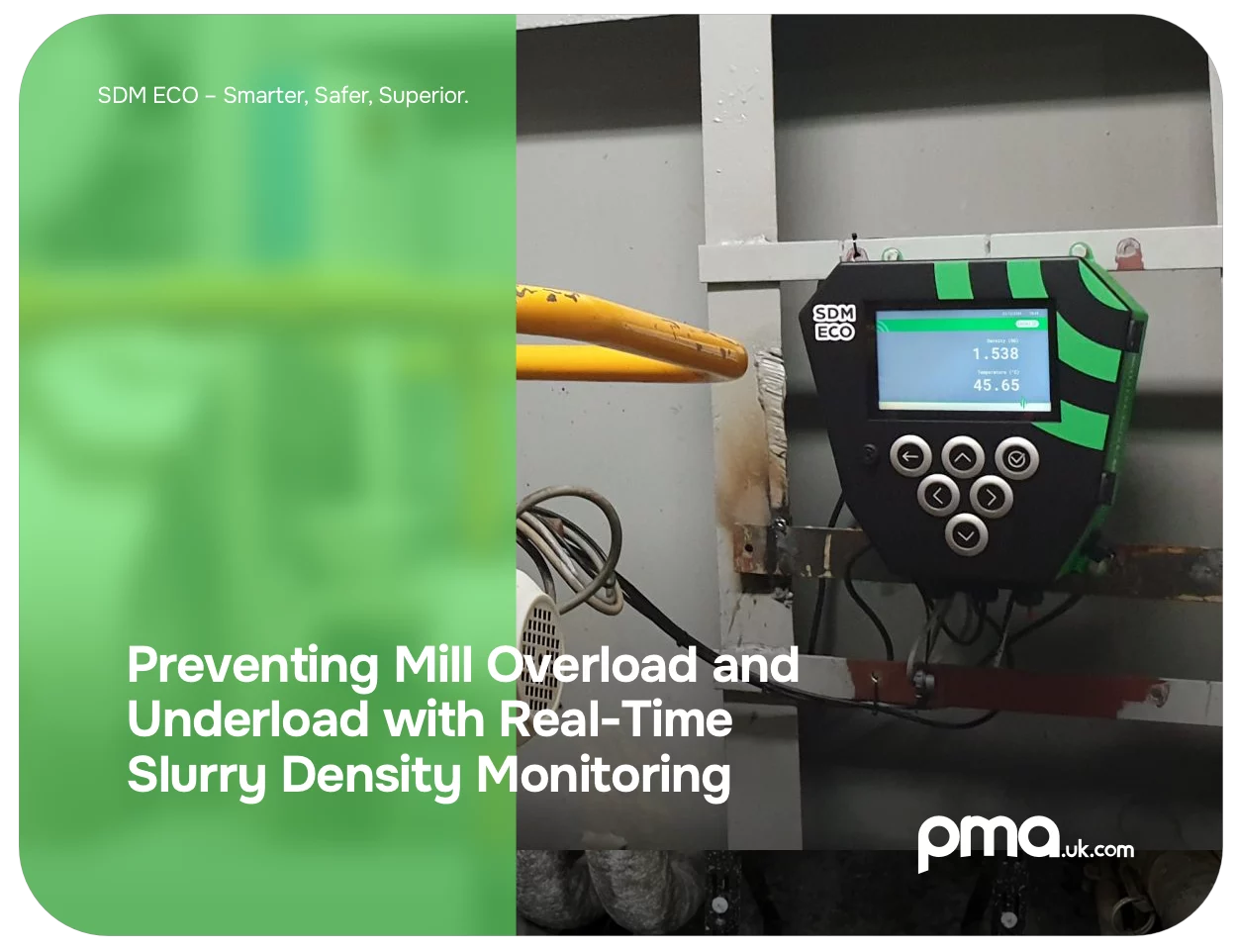

Grinding-circuit performance can change when ore characteristics, feed rate, water addition, equipment condition or circulating load changes. Slurry density is one useful process variable within that system: a continuous trend can help operators see changing conditions earlier than intermittent samples alone.
This guide explains how to use density data responsibly around a grinding mill and hydrocyclone circuit. It does not claim that one measurement prevents every overload or determines classification performance by itself.
What mill overload means in practice
A mill can become overloaded when material accumulates faster than the circuit can process and discharge it. Symptoms may appear in throughput, power, sound, pressure, level, pump behaviour or downstream classification. High or changing slurry density can be part of the cause or an accompanying signal, but it should be interpreted with the other process measurements.
The opposite condition also matters. Excess water or insufficient solids feed can move the circuit away from its intended operating state. The useful objective is a stable, understood process—not simply the highest or lowest density reading.
Where continuous density can add visibility
- Mill discharge: observe the slurry leaving the grinding stage at the exact documented point.
- Sump or pump feed: relate density to level, water addition, pump state and mixing.
- Hydrocyclone feed: monitor one important feed condition alongside pressure, flow, ore and cyclone configuration.
- Flotation feed: understand the density presented to the downstream separation stage.
Do not treat these locations as interchangeable. Residence time, dilution, recirculation and sampling position can make two readings describe different streams.
Density needs process context
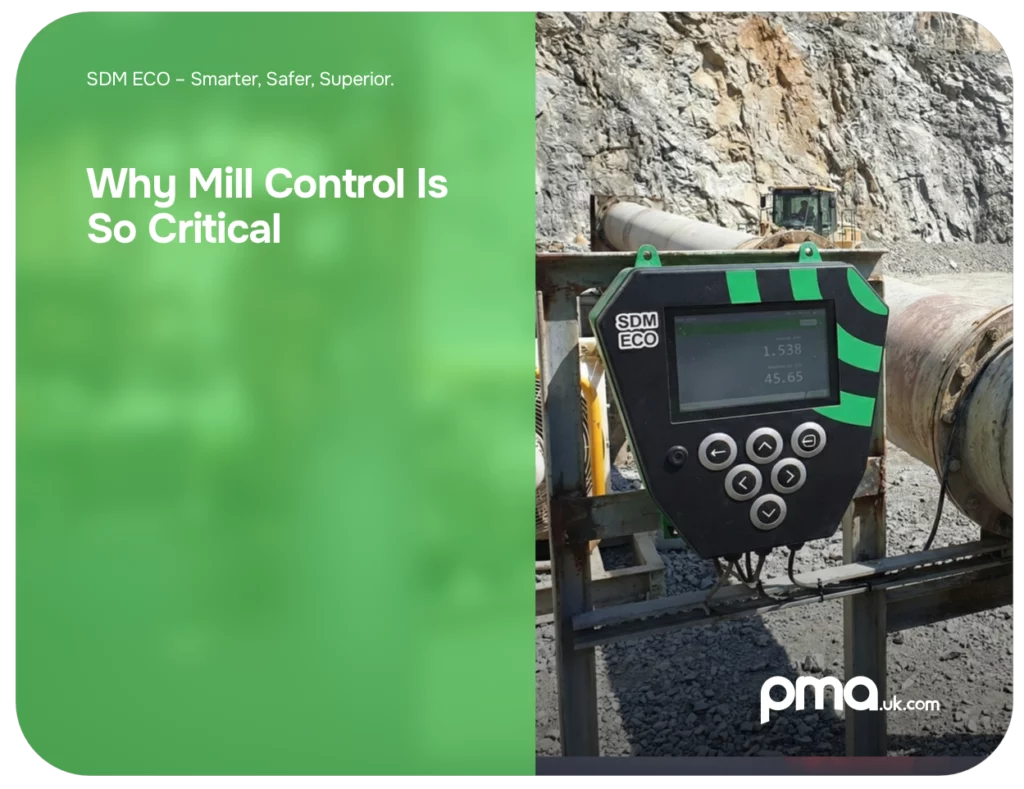
A density trend can show that the stream has changed, but not necessarily why. Align it with feed rate, added water, mill power, sump level, pump speed, cyclone-feed pressure, volumetric flow and time-matched samples. Ore hardness and particle-size distribution may also change the circuit response.
Operators should have a documented response to a changing density signal: which related variables to inspect, which sampling check to make and which control or safety limits remain independent. Avoid automating a response until the signal has been commissioned across representative states.
What published Rhosonics evidence shows
Rhosonics reports SDM measurements on grinding-mill feed and cyclone feed in an Agnico Eagle regrinding circuit. The published objectives included a consistent cyclone-feed target and stability in regrind-mill feed density. A Brazilian gold-processing case describes an SDM installed at the hopper feeding hydrocyclone classification, with calibration checked against laboratory analysis.
These cases demonstrate defined measurement tasks and validation methods. They do not guarantee recovery, energy, throughput or overload-prevention results for another circuit.
A six-step grinding-circuit measurement plan
- Name the instability or decision. Separate mill loading, water addition, pumping and classification questions.
- Map the circuit. Mark feed, mill, sump, water, pumps, cyclones, samples and downstream stages.
- Select a representative location. Check pipe fill, air, settling, abrasion, pressure, access and isolation.
- Define the related signals. Align density with the process data needed to interpret it.
- Plan commissioning evidence. Use time-matched reference samples across normal and relevant transition states.
- Document operator response. State what the signal can support, when it is invalid and which safeguards remain separate.
Non-nuclear ultrasonic measurement with the SDM ECO
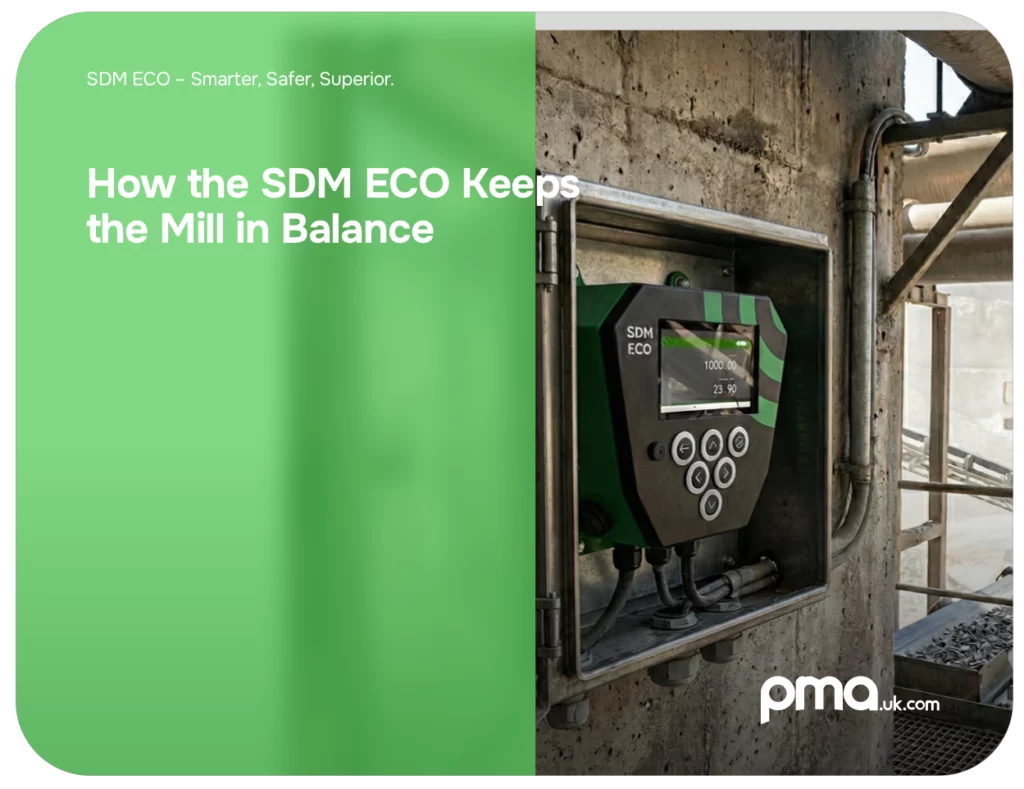
The Rhosonics SDM ECO uses ultrasonic acoustic-impedance measurement to provide a continuous slurry-density signal without a radioactive source. Selection still depends on the slurry, carrier liquid, temperature, pipework, fill condition, entrained air, abrasion and validation method.
For the classification duty, continue to the hydrocyclone-feed density guide. For project delivery, use the SDM ECO installation and commissioning guide.
Frequently asked questions
Can density measurement prevent every mill overload?
No. Density can provide valuable visibility, but mill loading also depends on ore, feed, water, equipment and control conditions. Use it within a multi-variable operating strategy.
Is cyclone-feed density enough to control classification?
No. Pressure, flow, particle-size distribution, cyclone condition and configuration also matter. Density is one continuously available input.
How should an online density reading be validated?
Agree the sampling and laboratory method, align timestamps and process residence time, and compare representative operating points rather than one convenient sample.
Sources and review scope
Reviewed 10 September 2026 against the Rhosonics Agnico Eagle regrinding-circuit case, gold-processing classification case, current SDM ECO product information and operating manual. Published case results apply to their cited installations.