

Searching for the best density gauge for mining can encourage a specification-first decision. In practice, the best option is the technology and configuration that fit the named stream, process objective, installation conditions, evidence plan and lifecycle duties.
A fair comparison should include ultrasonic, radiometric and any other technically relevant method rather than forcing every duty into a two-product contest.
The best gauge is the one that fits the measurement duty and evidence plan
Start by defining the stream, normal and upset ranges, carrier liquid, solids, temperature, pressure, pipe dimensions, flow regime and required output. State whether the value is for monitoring, alarming, control or a calculation with another instrument.
The non-nuclear versus nuclear selection guide provides a detailed comparison framework and explains why measurement suitability and radiation-management duties should be considered separately.
Compare measurement principles in the actual process
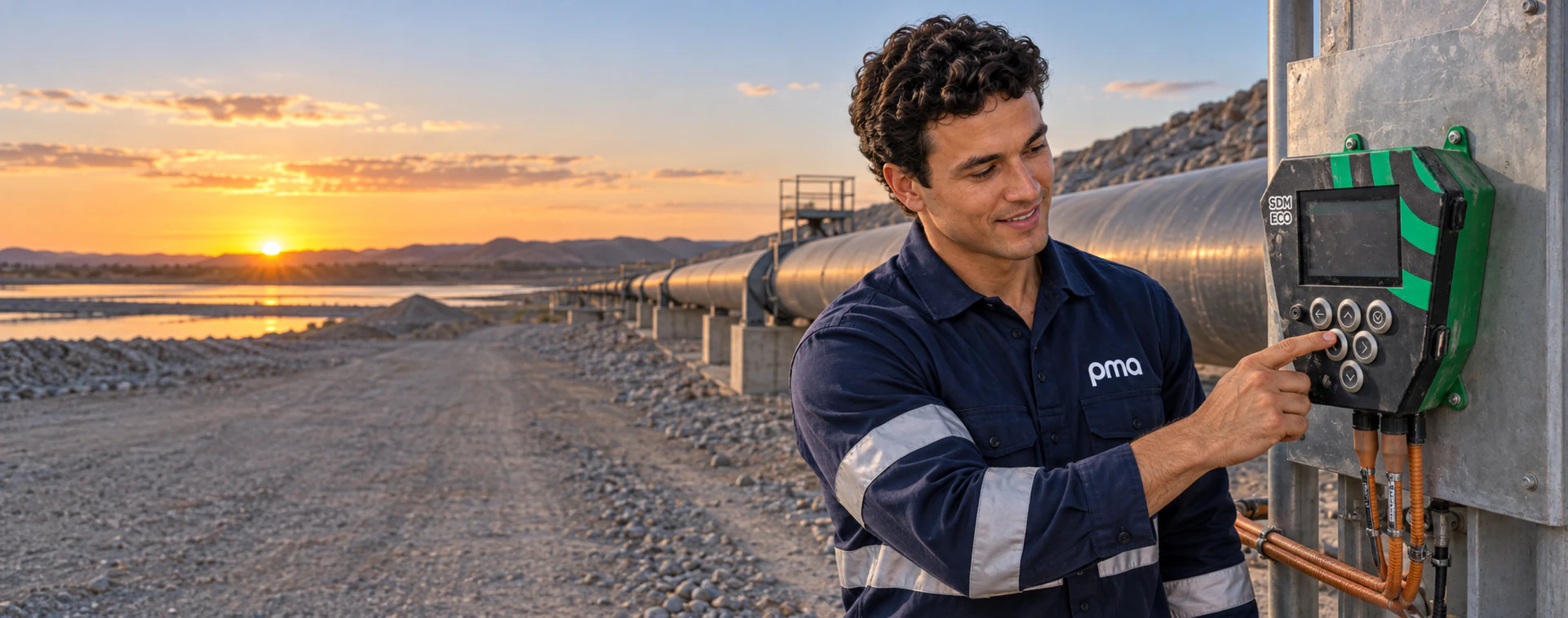
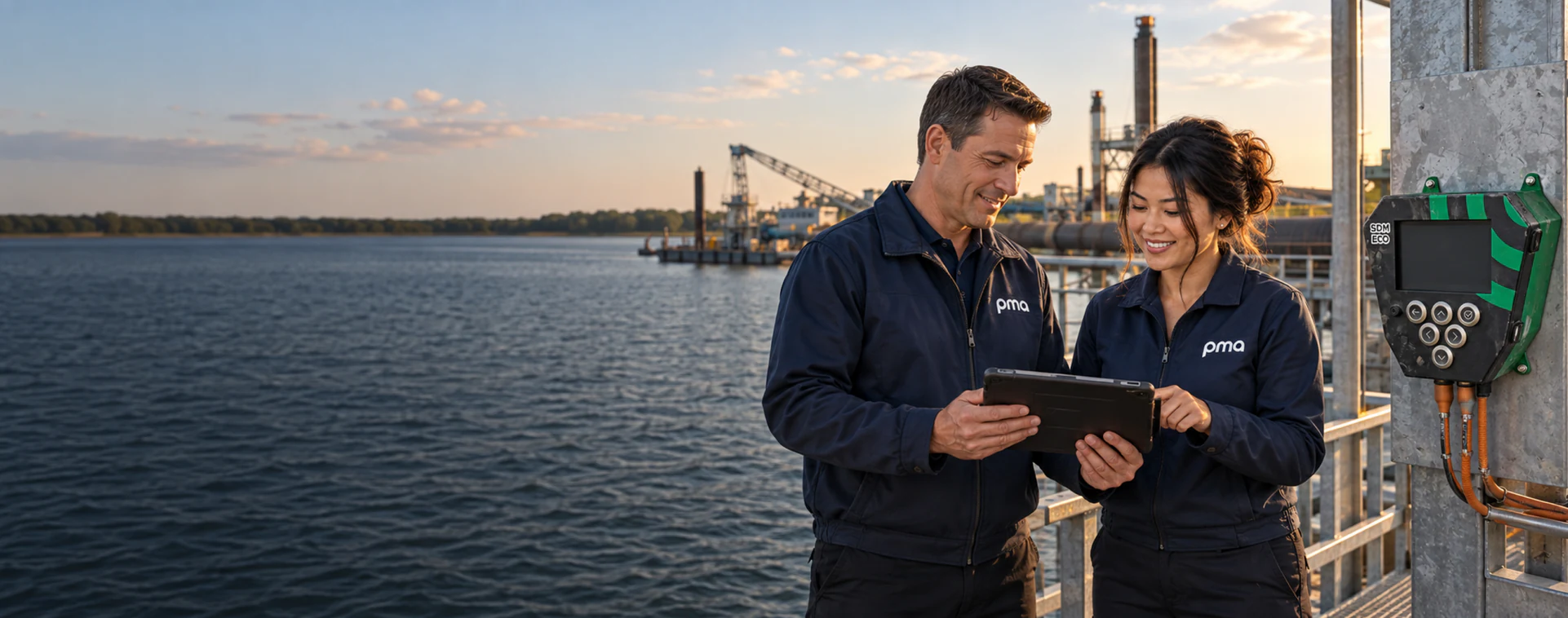
The SDM ECO uses acoustic impedance at a process-contact sensor to calculate slurry density. A radiometric gauge infers density from attenuation through the process. Coriolis, differential-pressure, tomography and laboratory methods may also be relevant. Each principle creates different requirements for installation, calibration, access, process contact and verification.
Review installation and hydraulic fit
Consider pipe material, diameter, wall, orientation, fill condition, velocity, bends, valves, pump proximity, access, abrasion, air and settling. External mounting may be useful where process-contact technology is unsuitable. A process-contact arrangement may avoid a radioactive source but still requires a suitable fitting and process-safety review.
Separate evidence from sales claims
Ask for evidence at relevant operating points. A stable water reading, one laboratory sample or a result from another mine does not prove the new duty. Agree how reference samples will be taken, how timestamps will be aligned and which tolerances matter to the process decision.
The Weir Minerals comparison test records ultrasonic, nuclear and Coriolis results in one controlled test arrangement. It is valuable evidence for that arrangement, not a universal ranking of technologies.
Include safety and regulatory duties accurately
A radiometric installation introduces responsibilities for ionising-radiation risk management and the applicable regulatory route. A non-nuclear ultrasonic instrument does not contain a radioactive source, so source-related duties do not apply to that instrument. It does not remove normal mechanical, electrical, pressure, hazardous-area or process-safety responsibilities.
Use current regulator guidance and competent radiation advice for any existing or proposed radiometric system. A product comparison is not legal advice.
Compare the whole lifecycle
- Engineering review and installation requirements
- Calibration and reference evidence
- Diagnostics, cleaning and planned maintenance
- Specialist competence and regulatory administration
- Spare parts, support and process downtime
- Changeover, removal and end-of-life responsibilities
Use a structured trial where uncertainty remains
A trial should include representative operating points, aligned samples, documented acceptance criteria and a plan for invalid data. Decide in advance who will review the results and what evidence is required before the signal can influence control.
PMA can screen the proposed duty against current SDM ECO product information and help define the next engineering step without making a blanket replacement claim.
Sources and further reading
- Rhosonics SDM ECO product information
- Rhosonics Weir Minerals comparison test
- UK HSE ionising-radiation guidance
Compare the proposed systems: send PMA the mining duty and existing instrument details.