

This guide explains how the Rhosonics SDM ECO ultrasonic density meter measures slurry density, where it can be used and what information is needed before selecting an installation.
What is an Ultrasonic Density Meter?
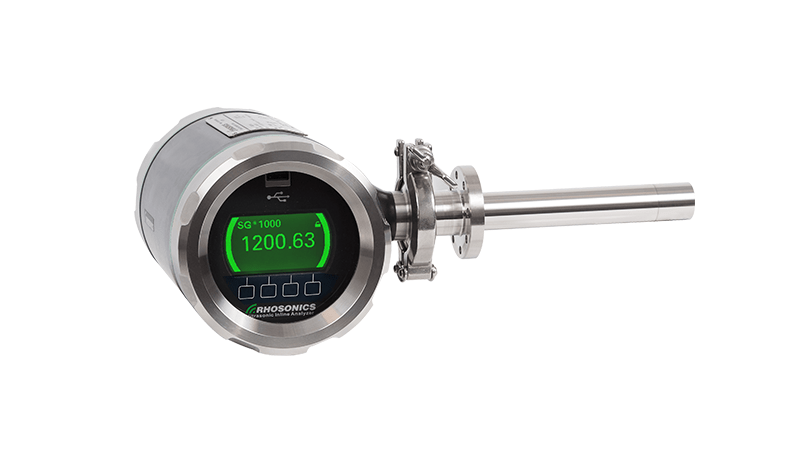
The SDM ECO measures acoustic impedance at the interface between its sensor and the slurry. Rhosonics combines that measurement with its calculation method to produce a continuous density value. The sensor is non-intrusive and the system does not use a radioactive source.

Why should I choose this non-intrusive ultrasonic sensor?
A non-nuclear ultrasonic instrument avoids the radioactive source used by radiometric density gauges. The SDM ECO is designed for continuous process measurement with an abrasion-resistant sensor, a touchscreen interface and several process-integration options. Final suitability and performance depend on the slurry and installation.

What industries is it ideal for?
The SDM ECO is primarily intended for water-based slurry applications such as mineral processing, dredging and tunnelling. Other processes should be reviewed individually because slurry composition, entrained air, pipe conditions and the required measuring range can affect suitability.

What features does it offer?
The SDM ECO provides real-time density information through a local 7-inch touchscreen and supports remote access options. Its modular sensor and process-integration arrangements are designed to simplify installation and maintenance in demanding slurry service. Confirm the required communications and options during application review.

What materials can be measured?
No density meter is suitable regardless of composition or process conditions. The SDM ECO should be assessed using representative slurry information, pipe dimensions and material, temperature, density range, flow behaviour and entrained-air risk.
Is the slurry density meter easy to install and use?
Rhosonics provides wafer, spool-piece, weld-o-let and clamp-in process-integration options. The correct arrangement depends on pipe diameter and material, wall thickness, access and whether the pipe is full or partially filled. Installation and commissioning should follow the current manufacturer instructions for the selected configuration.

What range of densities can the non-intrusive ultrasonic sensor accurately measure?
The usable density range and expected performance must be confirmed for the specific slurry and selected SDM ECO configuration. Give PMA the minimum, normal and maximum density, together with representative process information, rather than selecting an instrument from a generic range alone.

Is it possible to use the SDM in hazardous environments?
Hazardous-area suitability must be confirmed for the exact instrument configuration, installation location and applicable site standard. Ask PMA to verify the current approvals and documentation before specifying equipment for a hazardous area.

Conclusion:
Ultrasonic slurry density measurement can provide continuous process information without a radioactive source, but a successful installation starts with a proper application review. Contact PMA with your slurry, pipework and control-system details to confirm whether the SDM ECO is appropriate.
Let’s talk about your application.
Speak to the PMA team about your instruments, reagents or service requirements. Tell us what you need, and we’ll help you find the right next step.
- Advice for your application. Find the right instruments, sensors and chemical reagents for your process.
- Practical service support. Discuss commissioning, calibration, maintenance or an instrument issue with our team.
- Clear next steps. Ask a technical question or request a callback, with your site and measurements in mind.
- An enquiry, not a mailing list. Your details are used to respond to you. You won’t be added to a marketing database.
Tell us how we can help
Share your requirements below. All fields are required.
Your enquiry goes directly to our team. Your details are used to respond to you, and you won’t be added to a marketing database. Read our privacy policy.