Maintenance Dredging Slurry Density Monitoring
Plan non-nuclear density measurement for recurring dredging work where variable recent sediments, vessel method and reporting needs shape the duty.
Design the measurement around the maintenance programme
Maintenance dredging restores navigable depth by removing recently deposited material from ports, harbours, rivers and channels. A density signal may support production and transport decisions, but seasonal sediment, debris, water conditions and the chosen dredger can change the measurement context.
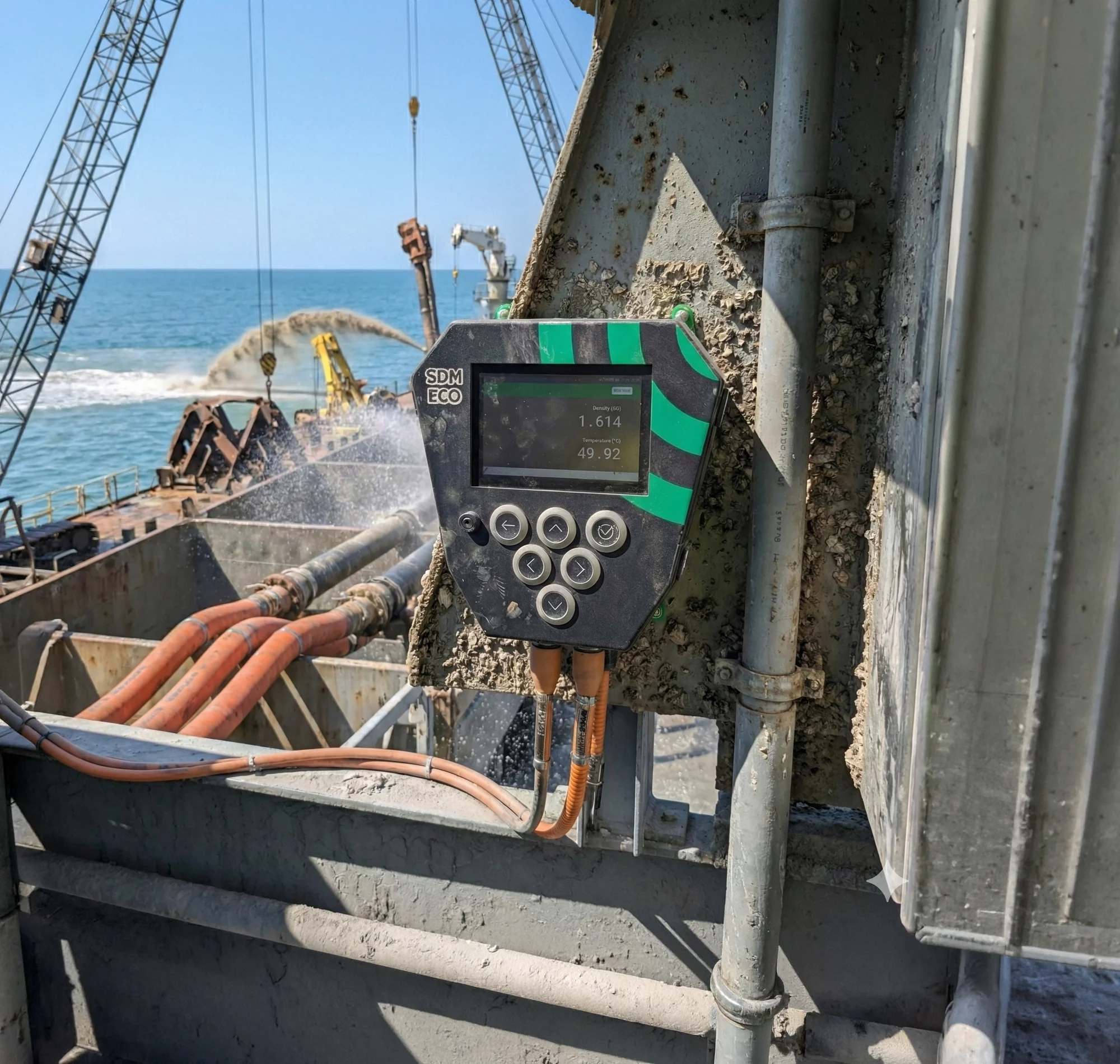
Representative dredging application image; no named port, harbour or customer relationship is implied.
Frame the maintenance-dredging application
The review should reflect the actual campaign, dredger and sediment rather than a generic harbour label.
Campaign scope
Define area, target depth, sediment information, dredging method, disposal route and programme.
Variable material
Document silt, sand, clay, organic matter, debris, salinity and seasonal variation.
Candidate duty
Choose suction, discharge or transport measurement according to the operational decision.
Data governance
Separate operational trends from contractual, navigation and environmental reporting requirements.
A practical SDM ECO review pathway
Use the sequence to move from a broad dredging requirement to a defined, testable measurement duty.
1. Define the campaign
Name the dredger, material route and measurement purpose.
2. Review variability
Use available sediment and operating evidence.
3. Survey the pipe
Confirm hydraulics, access and service constraints.
4. Validate each basis
Reconfirm when vessel, material or campaign conditions change.
Where the measurement can add value
The signal is useful only when it supports a defined operational decision and remains inside a validated measurement boundary.
Potential value
A continuous trend can help crews see loading changes between samples and add context to production or pipeline performance.
Important limitations
Density monitoring does not replace hydrographic survey, environmental monitoring, sediment characterization or statutory dredging controls.
Sources and application boundary
The sources below define the general dredging method and measurement context. Final suitability depends on the actual slurry, pipe hydraulics, installation point, operating range and validation evidence for the project.
Continue exploring
Return to the dredging application library, review the installation and commissioning guide, or see the SDM ECO product page.
Let’s talk about your application.
Speak to the PMA team about your instruments, reagents or service requirements. Tell us what you need, and we’ll help you find the right next step.
- Advice for your application. Find the right instruments, sensors and chemical reagents for your process.
- Practical service support. Discuss commissioning, calibration, maintenance or an instrument issue with our team.
- Clear next steps. Ask a technical question or request a callback, with your site and measurements in mind.
- An enquiry, not a mailing list. Your details are used to respond to you. You won’t be added to a marketing database.
Prefer to speak with us?
Call 01484 843 708You can also email sales@pma.uk.com.
Need a faster response?
Share a few details about your application now, and we can help you find the right next step sooner.
Tell us how we can help
Share your requirements below. All fields are required.
Your enquiry goes directly to our team. Your details are used to respond to you, and you won’t be added to a marketing database. Read our privacy policy.