Bentonite Slurry Density Monitoring for Tunnelling
Track changes in bentonite supply, return and recovery streams with a continuous, non-nuclear density signal.
Know which tunnelling stream the density represents
In slurry tunnelling, clean bentonite suspension is delivered to the excavation face while the return stream carries excavated solids to separation and recovery. Density can be useful on either side of that circuit, but the sensor position and intended decision must be explicit. A Rhosonics tunnelling case documents a 150 mm steel return line and a clamp-in SDM arrangement; that installation is an example, not a default specification for a new UK project.
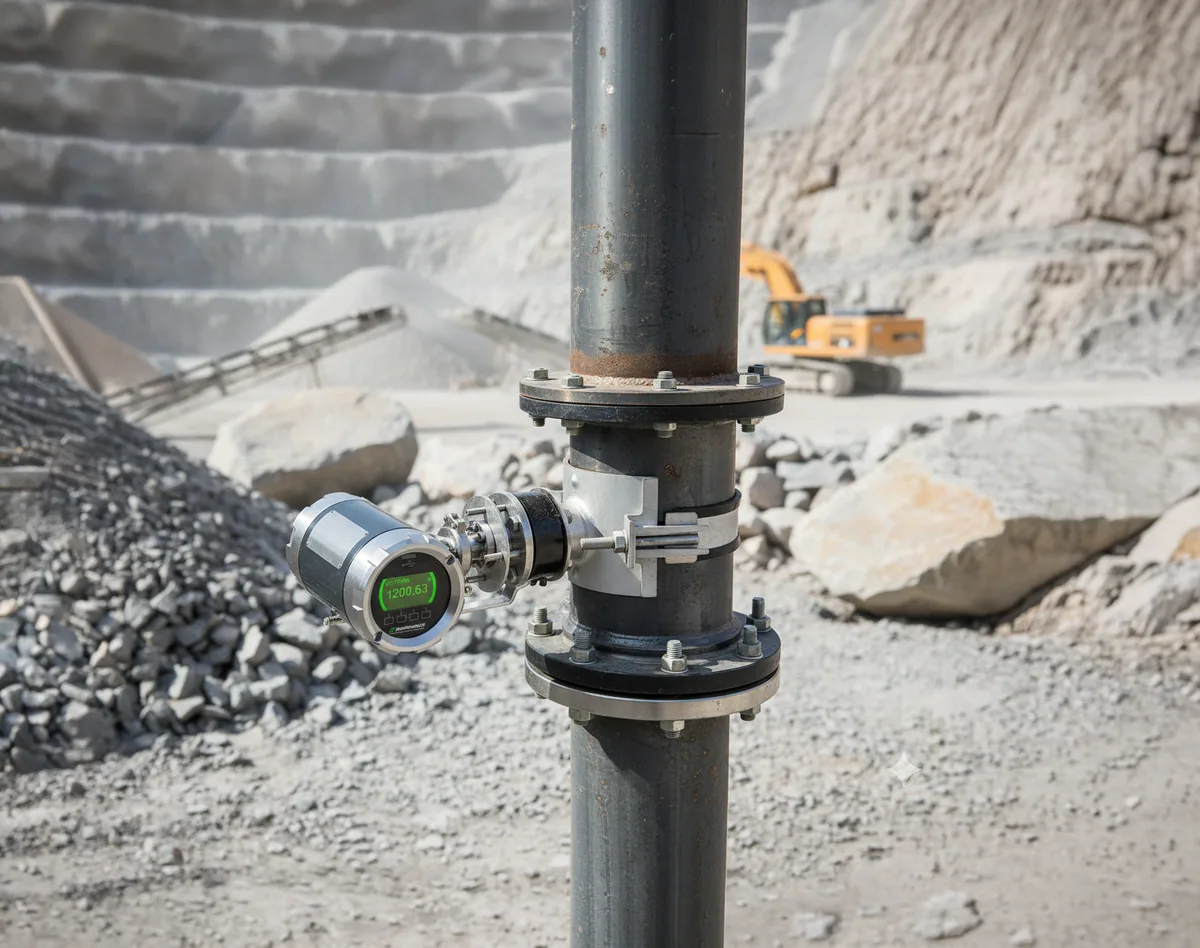
Genuine Rhosonics inline sensor image. The mounting arrangement must be designed for the selected pipe and duty.
Map the bentonite circuit before selecting a point
The measurement should be tied to the balance of clean mud, excavated solids and recovered bentonite.
Supply slurry
Record the clean-mud formulation, target range, tank mixing and the point where slurry is pumped towards the tunnel boring machine.
Return slurry
Review the solids-bearing return line, separation-plant inlet and operating variation caused by changing ground conditions.
Recovery process
Determine whether density supports separation, dilution, bentonite recovery or an alert to a change in solids loading.
Installation basis
Confirm pipe fill, diameter, material, pressure, abrasion, entrained air, access and the manufacturer-approved mounting option.
A practical measurement review pathway
Move from a broad process idea to a defined, testable duty before using the signal for decisions.
Name the decision
Define whether operators need a trend, alarm, mass-balance input or recovery-control signal.
Characterise the slurry
Collect representative ranges for bentonite, excavated solids, water and any additives.
Survey the line
Check hydraulics and a suitable installation point with maintenance access.
Validate on site
Compare the live trend with time-aligned samples across normal and changing ground conditions.
Where the measurement adds value
Set out both the useful signal and its limitations before specifying the instrument.
Operational value
A validated online density trend can reduce reliance on isolated grab samples and show how solids loading changes through a tunnelling shift or recovery step.
Important boundary
Density does not by itself identify particle size, bentonite quality, ground composition or separation efficiency. The manufacturer case study used a particular legacy SDM configuration; PMA must confirm the current model and mounting for a new duty.
Sources and application boundary
The sources below establish the measurement context; they are not evidence of a PMA installation at your site. Final suitability depends on the actual material, operating range, installation and representative validation.
Search every application
Use the Application Finder to search process measurement guidance by material, duty or analyser. For related slurry transport duties, browse the dredging measurement library. Review the SDM ECO analyser before specifying an installation.
To contact us, or to request a callback, simply use the form below and we will promptly get back to you.
We greatly value all of the inquiries which our products and services generate and we are very confident that we will have the right solution available for you at the first point of contact when you reach our experienced team of engineers.

We're here to help.
Whether you need a callback or have a highly technical question to ask, our expert staff are always on hand. Our focus has always been to deliver world-class customer service.