Maintenance Dredging Slurry Density Monitoring
Plan non-nuclear density measurement for recurring dredging work where variable recent sediments, vessel method and reporting needs shape the duty.
Design the measurement around the maintenance programme
Maintenance dredging restores navigable depth by removing recently deposited material from ports, harbours, rivers and channels. A density signal may support production and transport decisions, but seasonal sediment, debris, water conditions and the chosen dredger can change the measurement context.
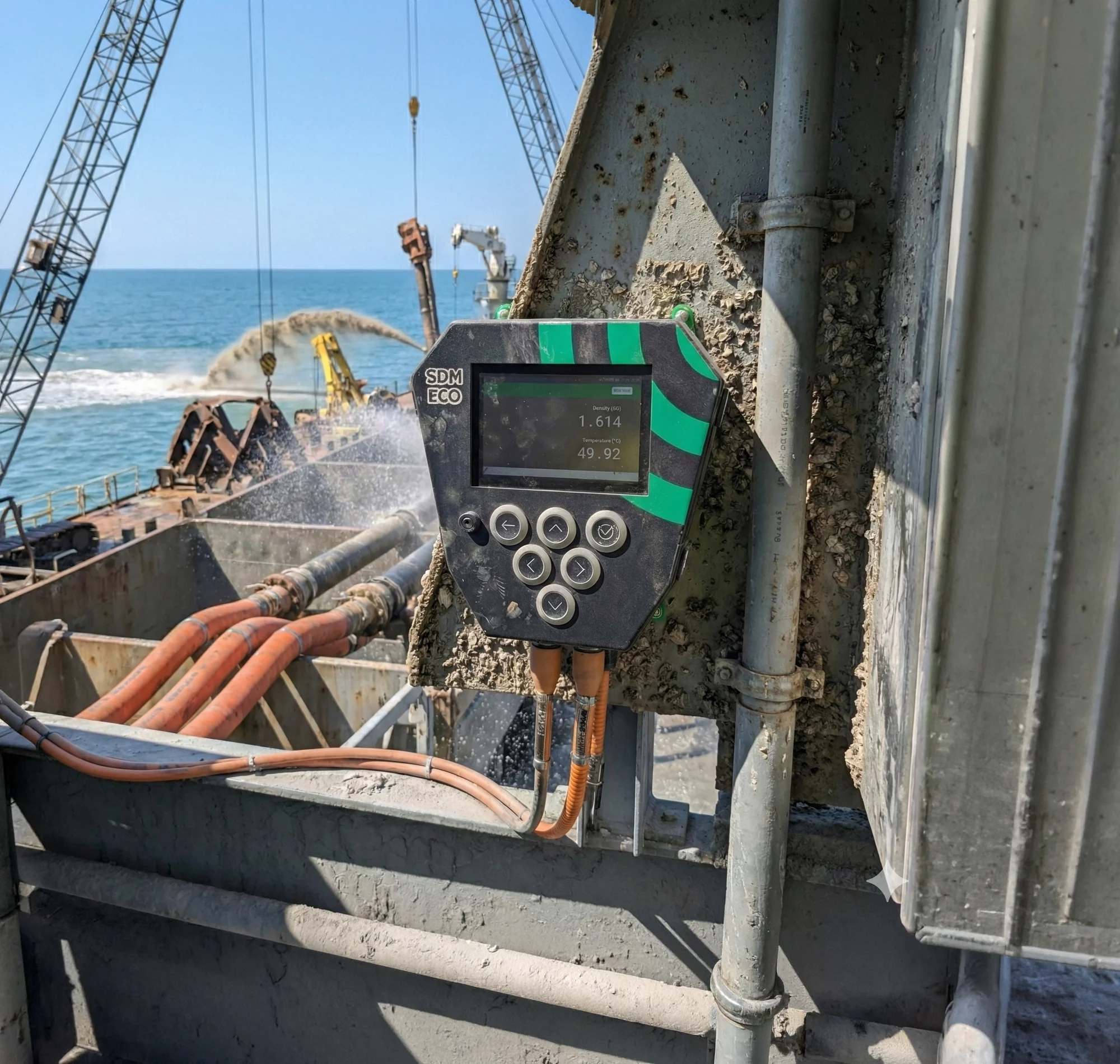
Representative dredging application image; no named port, harbour or customer relationship is implied.
Frame the maintenance-dredging application
The review should reflect the actual campaign, dredger and sediment rather than a generic harbour label.
Campaign scope
Define area, target depth, sediment information, dredging method, disposal route and programme.
Variable material
Document silt, sand, clay, organic matter, debris, salinity and seasonal variation.
Candidate duty
Choose suction, discharge or transport measurement according to the operational decision.
Data governance
Separate operational trends from contractual, navigation and environmental reporting requirements.
A practical SDM ECO review pathway
Use the sequence to move from a broad dredging requirement to a defined, testable measurement duty.
1. Define the campaign
Name the dredger, material route and measurement purpose.
2. Review variability
Use available sediment and operating evidence.
3. Survey the pipe
Confirm hydraulics, access and service constraints.
4. Validate each basis
Reconfirm when vessel, material or campaign conditions change.
Where the measurement can add value
The signal is useful only when it supports a defined operational decision and remains inside a validated measurement boundary.
Potential value
A continuous trend can help crews see loading changes between samples and add context to production or pipeline performance.
Important limitations
Density monitoring does not replace hydrographic survey, environmental monitoring, sediment characterization or statutory dredging controls.
Sources and application boundary
The sources below define the general dredging method and measurement context. Final suitability depends on the actual slurry, pipe hydraulics, installation point, operating range and validation evidence for the project.
Continue exploring
Return to the dredging application library, review the installation and commissioning guide, or see the SDM ECO product page.
To contact us, or to request a callback, simply use the form below and we will promptly get back to you.
We greatly value all of the inquiries which our products and services generate and we are very confident that we will have the right solution available for you at the first point of contact when you reach our experienced team of engineers.

We're here to help.
Whether you need a callback or have a highly technical question to ask, our expert staff are always on hand. Our focus has always been to deliver world-class customer service.