Hermitage Quarry Slurry Density Monitoring Review
An application review for continuous density measurement around washed aggregate, cyclone and process-water duties at Hermitage Quarry.
Kentish Ragstone density monitoring at Hermitage Quarry in Maidstone
Hermitage Quarry in Maidstone, Kent processes Kentish Ragstone through crushers, screens, log washers and cyclones for construction and concrete products. The SDM ECO can provide continuous non-nuclear density data on a suitable fully flooded slurry line, helping operators track changes through washing or cyclone duties. PMA would confirm the measurement point against the current plant arrangement and operating range.
Application note: This guide uses published process information to identify where SDM ECO measurement may be useful. PMA would confirm the current process, pipe conditions and calibration range before recommending an installation.
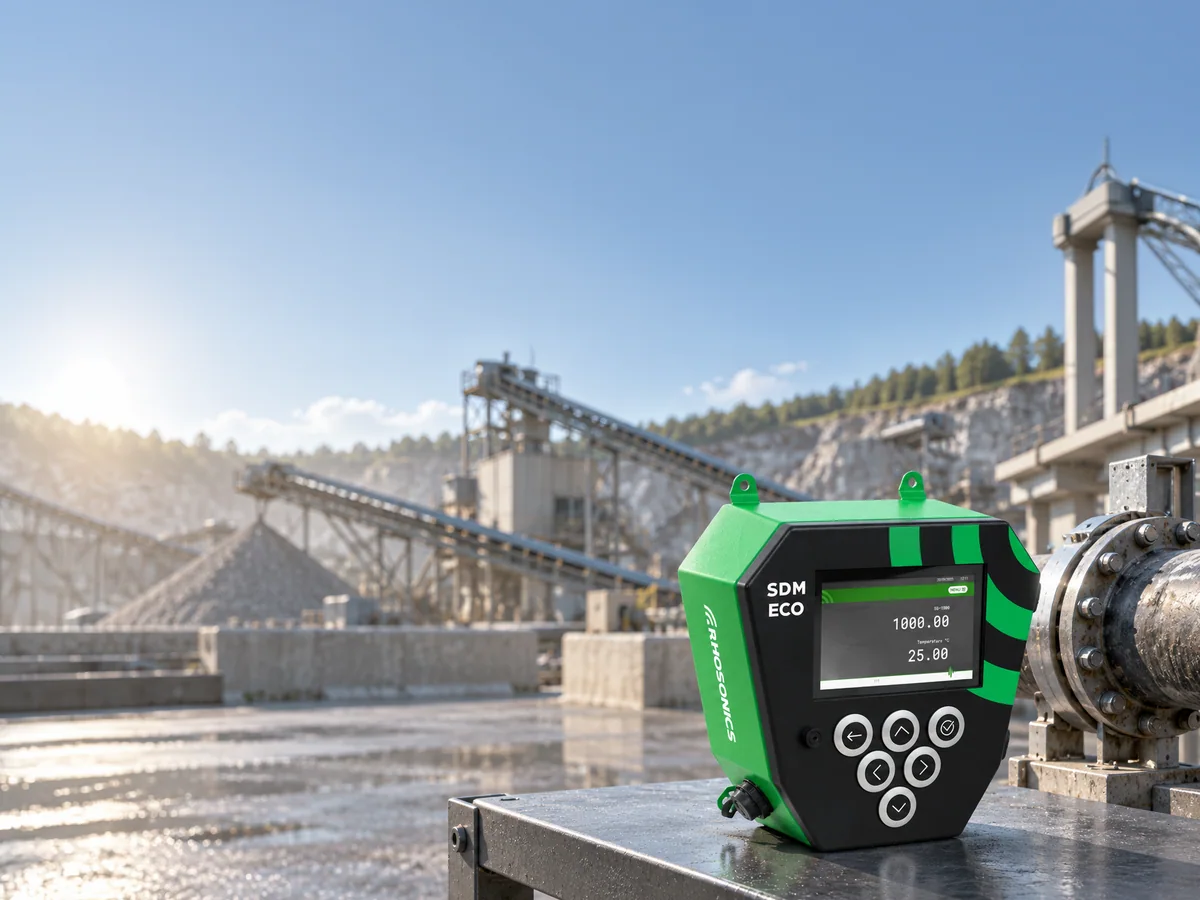
Representative Rhosonics quarry application image. It is not presented as a photograph of Hermitage Quarry.
Quarry process and SDM ECO opportunities
High throughput alone does not identify the correct sensor point; hydraulics and decision value do.
Local process and material
The published process includes washed 10 mm and 20 mm aggregate, sharp sand, log washing and cyclone-based wet processing.
Where SDM ECO can help
A review could screen cyclone feed, sand processing or dirty-water return lines for a fully flooded, representative density duty.
What to confirm
Collect the current process diagram, pipe and pump data, normal range, feed changes, water additions, sample results and maintenance constraints.
Application considerations
Coarse particles, abrasion, entrained air and intermittent flow can undermine representativeness. The chosen location must suit both measurement and maintenance.
A practical SDM ECO review pathway
These four steps show how PMA would assess a potential SDM ECO duty, from selecting the process stream through to validating the measurement against representative site data.
1. Define the stream
Identify the exact washer, cyclone or return-water line.
2. Define normal
Document stable operating and maintenance states.
3. Check installation
Assess pipe fill, velocity, wear and access.
4. Validate before use
Compare the signal with representative process evidence.
Where continuous density may add value
Continuous density may add diagnostic context to water balance, cyclone loading and sand processing, helping operators investigate deviations between product checks.
What PMA would verify on site
PMA would assess fitting options, abrasion, access, isolation and process variability and would not recommend control use until matched evidence demonstrates repeatability.
Sources and application guidance
Public facts used for this site profile are linked below. Process descriptions can change, so PMA would confirm the current flowsheet, operating range and measurement objective directly with the operator before proposing hardware.
Continue exploring
Return to the UK quarry application library, review mining slurry measurement guidance, or see the SDM ECO product page.
To contact us, or to request a callback, simply use the form below and we will promptly get back to you.
We greatly value all of the inquiries which our products and services generate and we are very confident that we will have the right solution available for you at the first point of contact when you reach our experienced team of engineers.

We're here to help.
Whether you need a callback or have a highly technical question to ask, our expert staff are always on hand. Our focus has always been to deliver world-class customer service.