SDM ECO non-nuclear slurry density meter
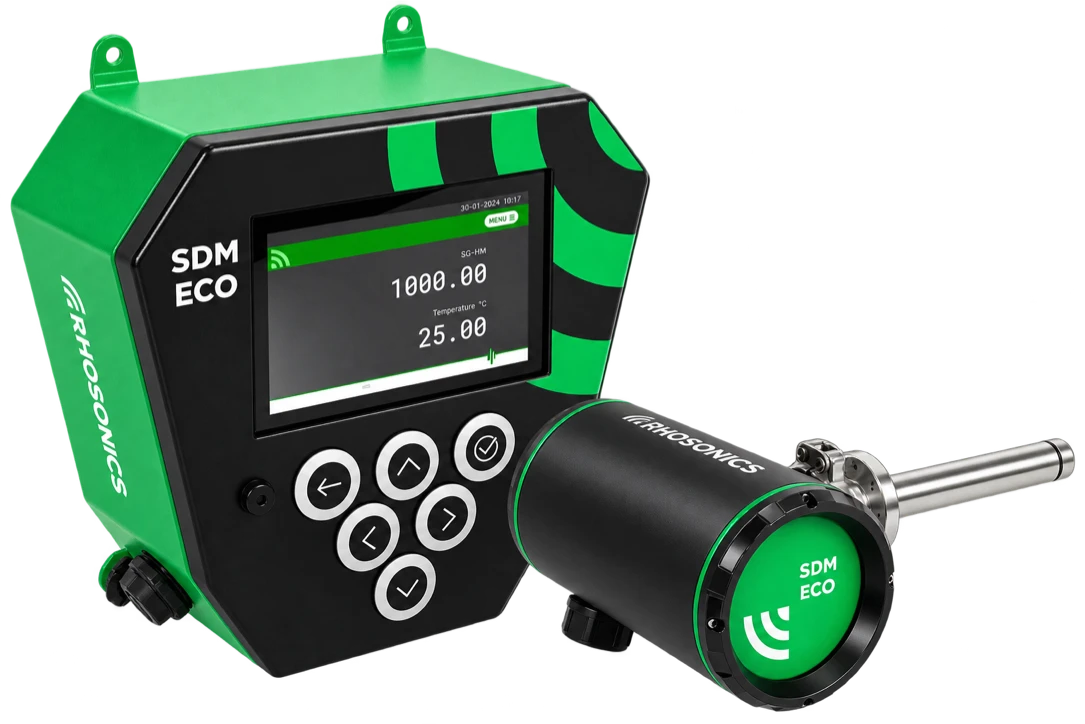
Why engineers specify the SDM ECO
Non-nuclear measurement
Continuous process visibility
No moving parts
Built for integration
How acoustic impedance measurement works
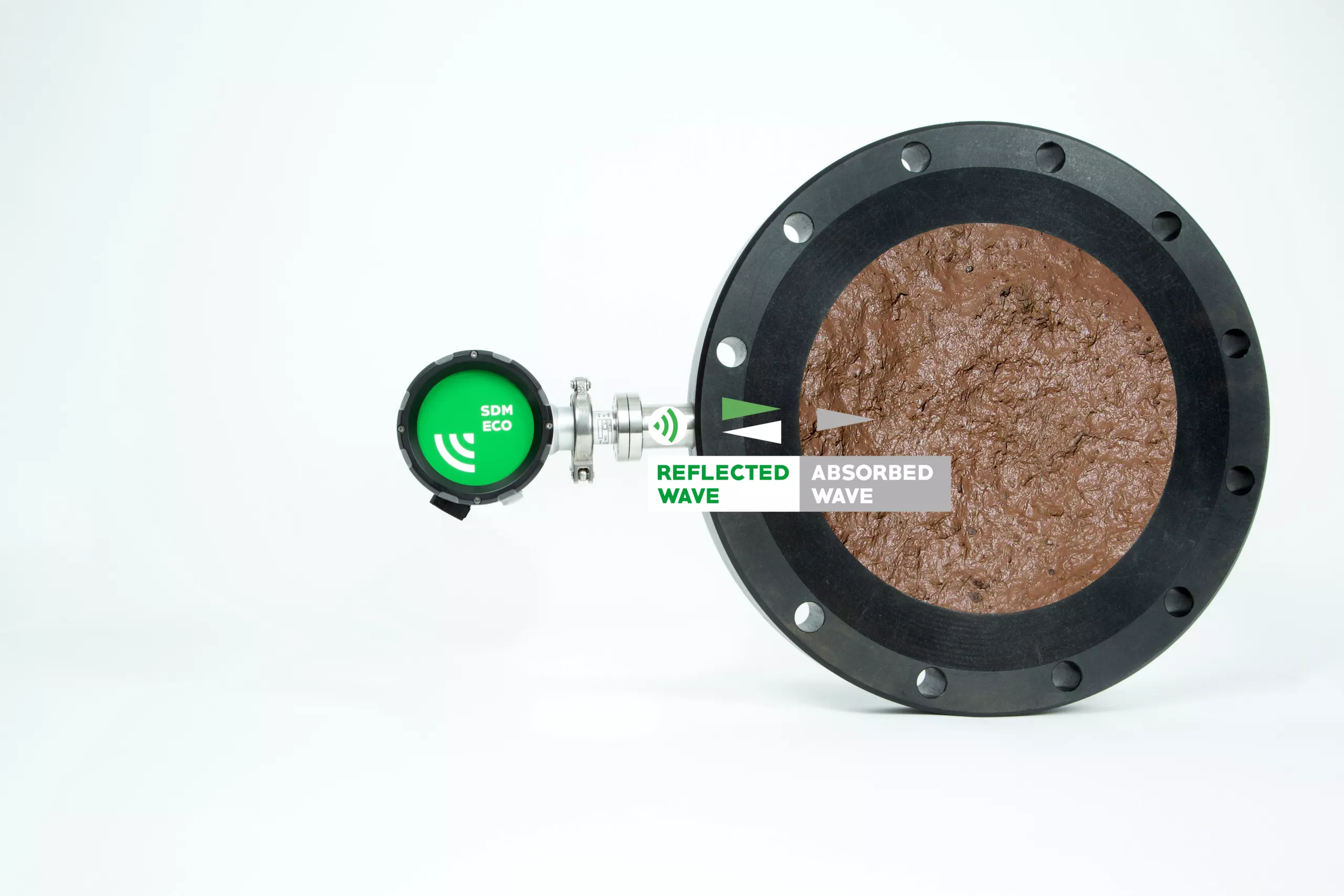
The SDM ECO sensor is mounted flush with the inside pipe wall. It sends an ultrasonic signal into the process and analyses the energy returned from the slurry boundary.
Transmit
The sensor introduces a controlled ultrasonic signal at the process boundary.
Interact
Part of the signal is reflected and part is absorbed by the slurry.
Calculate
The analyser evaluates the response against its configured calibration to determine density continuously.
Technical data
| Measurement principle | Ultrasonic acoustic impedance |
|---|---|
| Typical accuracy | ±0.5% |
| Sensor process temperature | 0–150°C |
| Analogue outputs | Two 4–20mA outputs |
| Digital communications | Ethernet, USB and RS485 |
| Transmitter protection | IP68 / NEMA 6P |
| Optional display | 7-inch touchscreen, IP65 / NEMA 4 |
System components
The wetted measurement component installed through the selected pipe integration.
Transmitter
Processes the measurement and provides outputs to the plant control system.
Optional 7-inch HMI
Local touchscreen access for configuration and process indication.
Four manufacturer-defined installation options
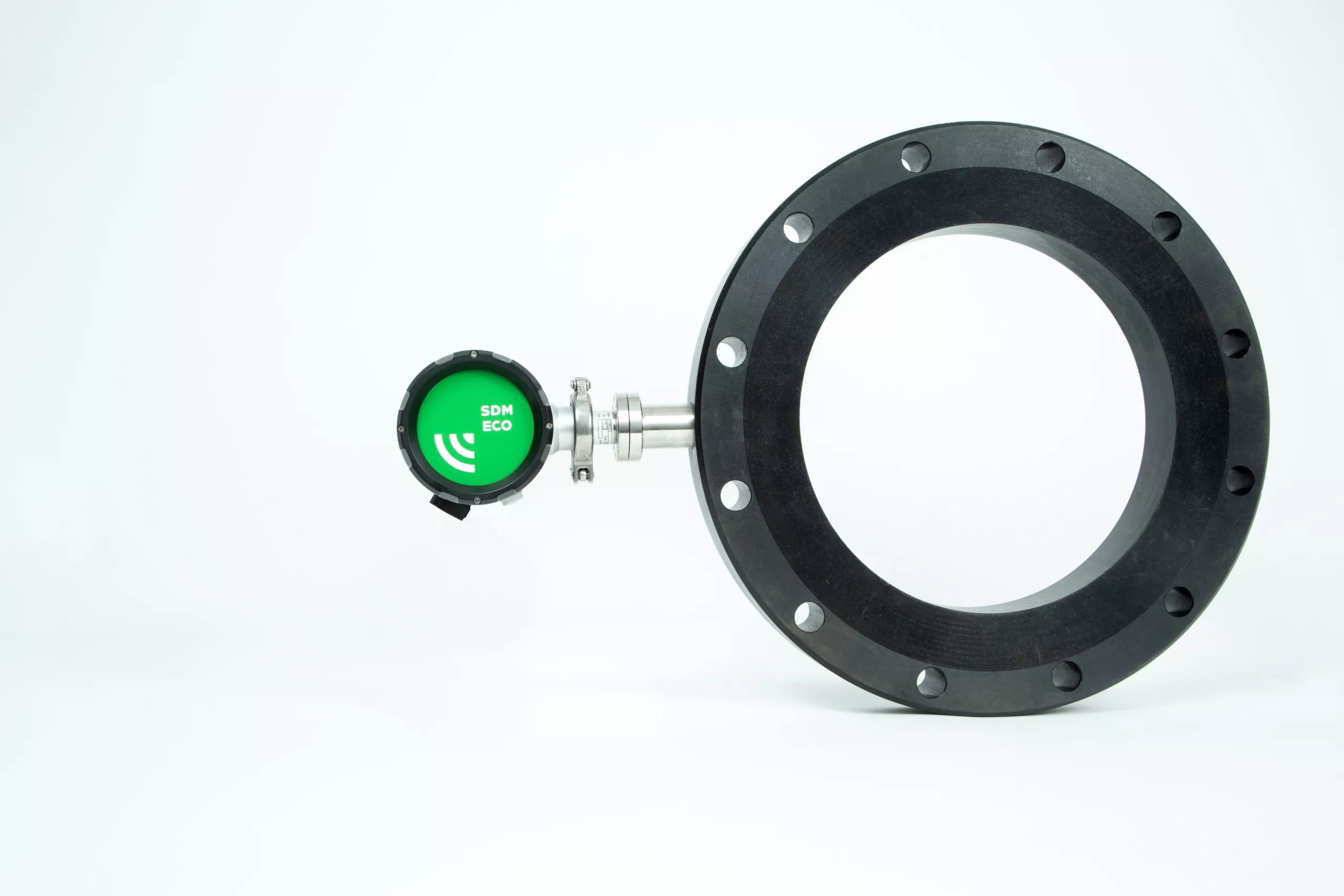
Wafer
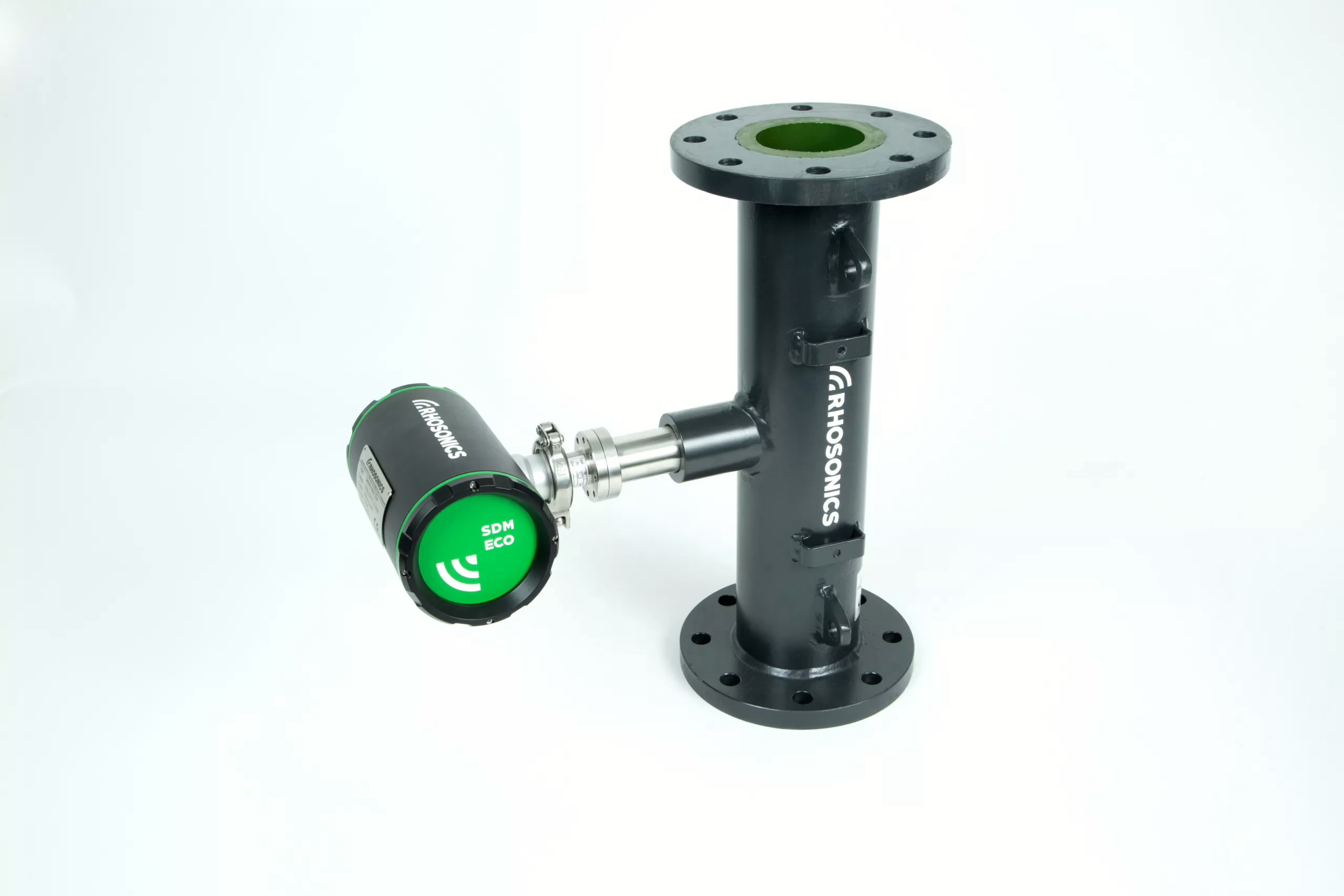
Spool-piece
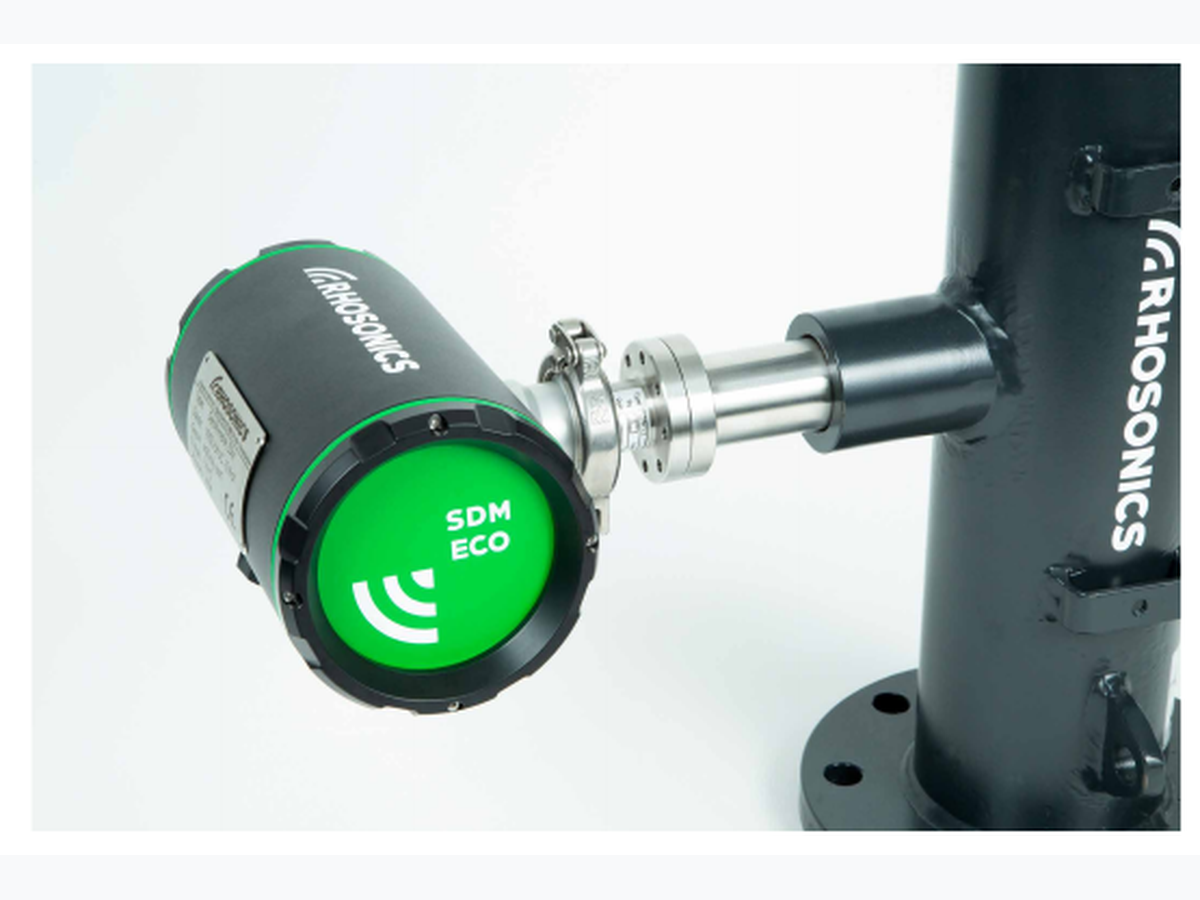
Weld-o-let
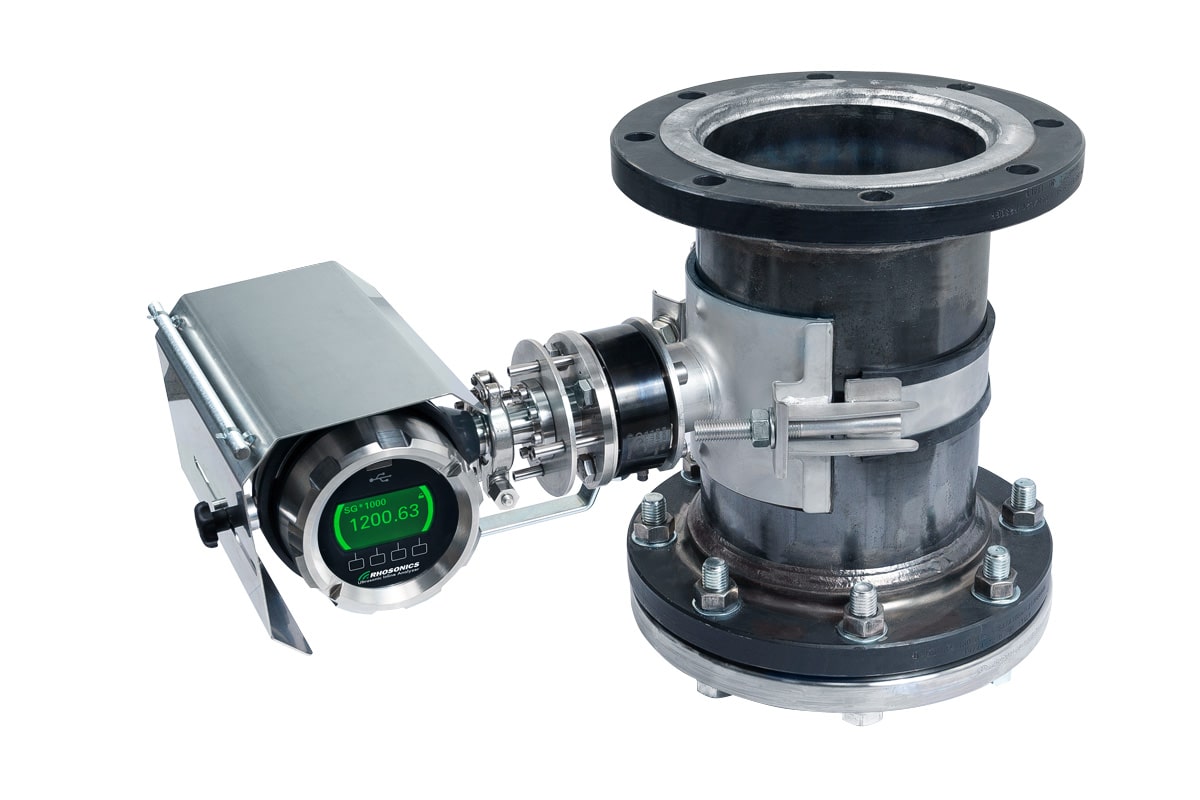
Clamp-in
Where real-time slurry density supports control
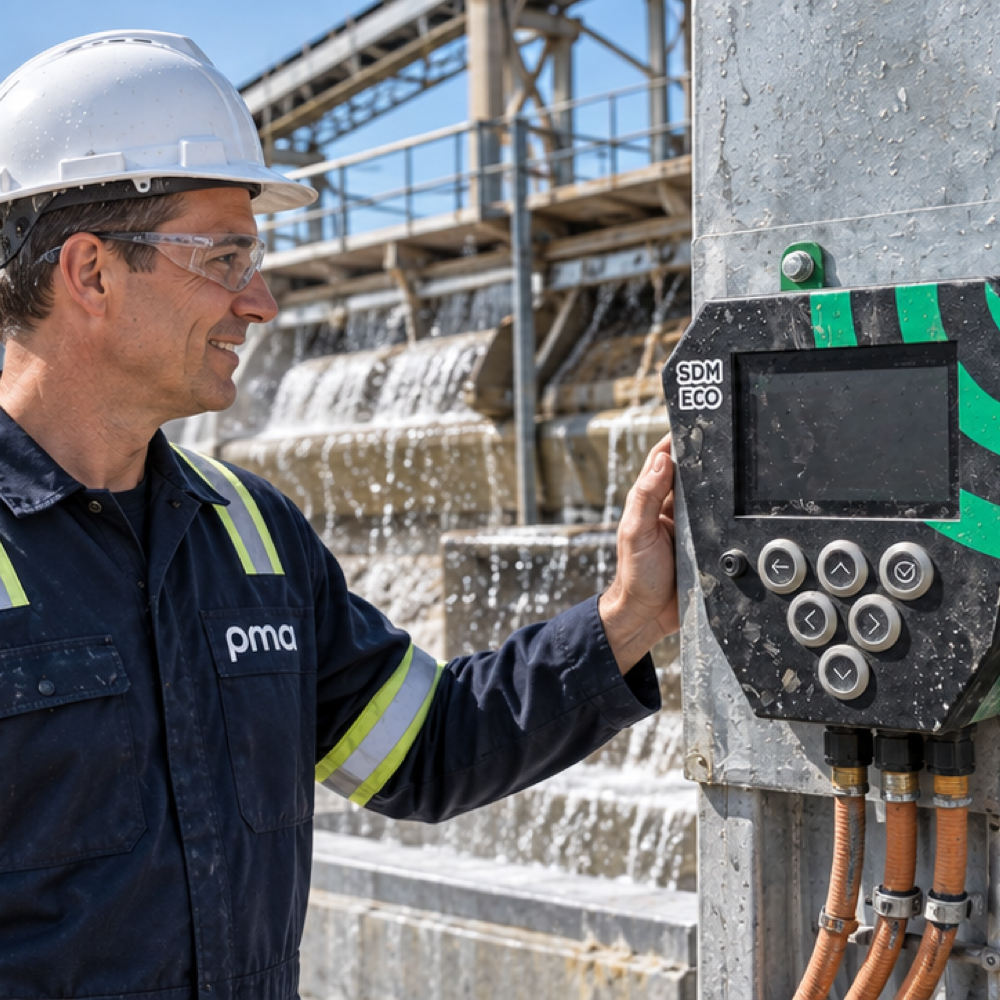
Thickener underflow

Hydrocyclone feed

Grinding circuits

Tailings transport
Field-proven installation context
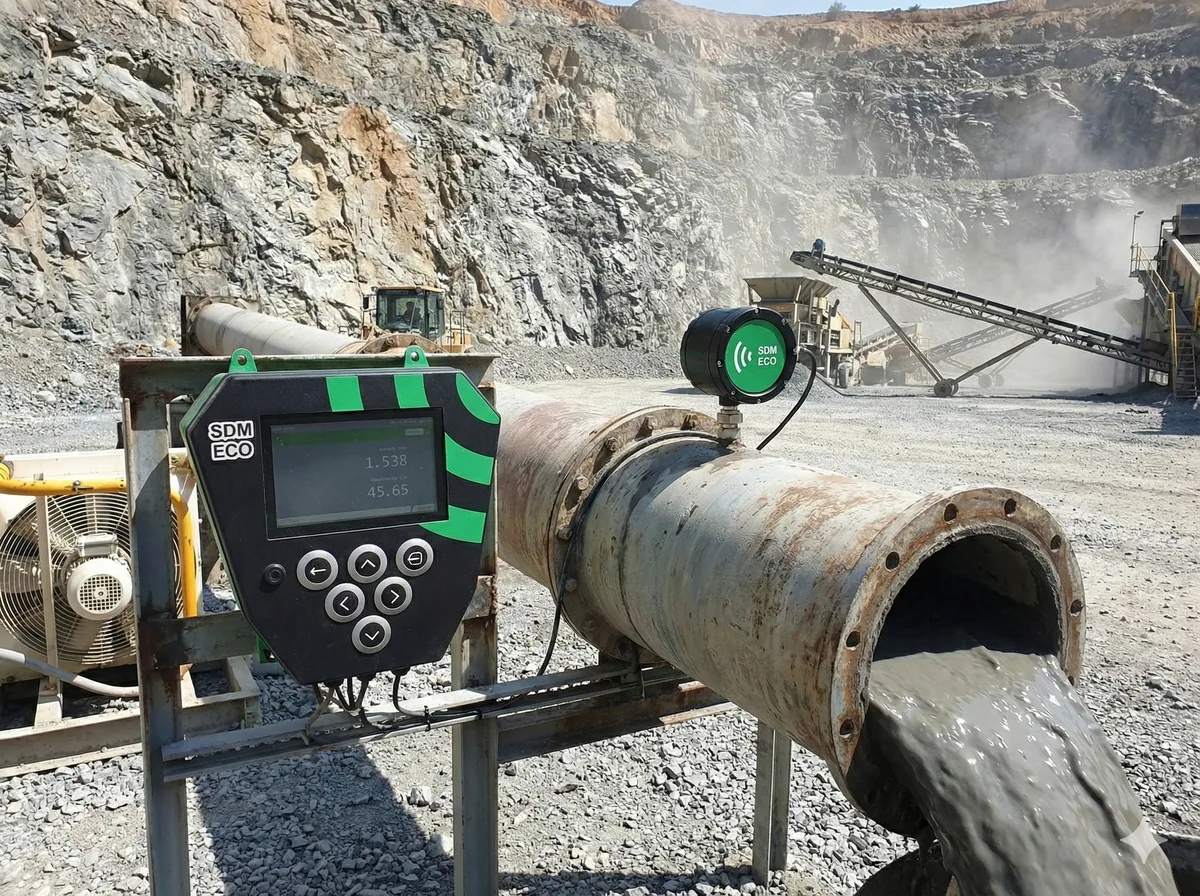
Engineering review checklist
Slurry composition
Pipe and process
Measurement objective
Validation plan
Technical resources
Find the right application guidance
Search PMA’s application library by process, material, measurement objective or location. Each result links to a dedicated engineering review page.
For dredger and pipeline duties, start with the dredging slurry density measurement guides. They explain density, concentration and production and link to application-specific review requirements.
Frequently asked questions
Key questions engineers ask when comparing non-nuclear ultrasonic density measurement with other approaches.