Make HF compatibility and safety part of the measurement specification
Hydrofluoric acid is listed by Rhosonics among chemical concentration applications, including semiconductor process use. A technically suitable acoustic relationship is only one part of the project. The process must also have approved materials, containment, ventilation, sampling, emergency and maintenance arrangements for the exact concentration and temperature.
Defined concentration model
The chemical system, reporting basis, operating range, temperature and possible co-components must be known. A one-component ultrasonic model should not be assumed to resolve independent changes in several chemicals.
Whole-system compatibility
Review the sensor, seals, fittings, pipework, valves, bypass, sample equipment and cleaning exposure. Compatibility must be confirmed by competent engineering and safety authorities, not inferred from a generic product label.
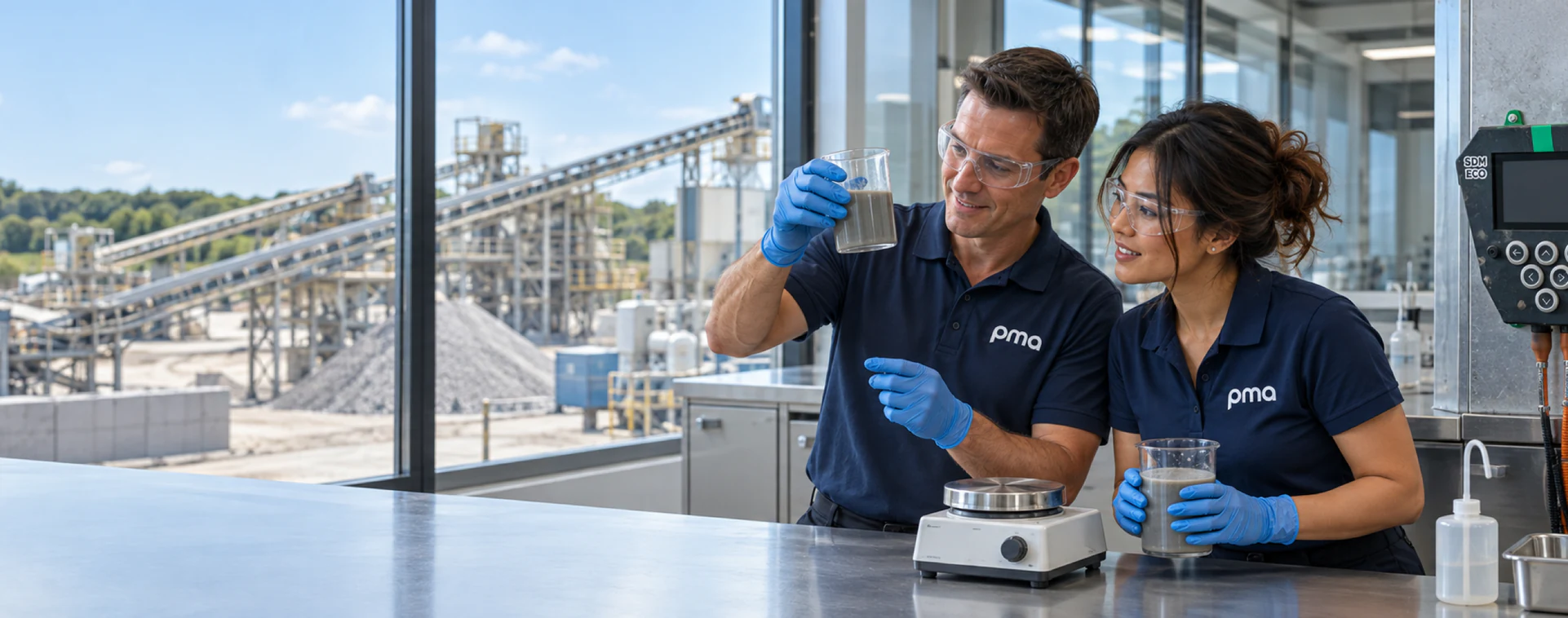
See the measurement in its process context
Application planning includes the surrounding process, safe access, representative sampling and verification—not only the analyser itself. PMA reviews these conditions together before recommending a measurement arrangement.
Three gates before an HF measurement project
Do not proceed from application name alone.
Chemistry gate
Document HF concentration, temperature, other dissolved constituents, contaminants and every operating state including flush, cleaning and upset conditions.
Compatibility gate
Obtain approval for all wetted materials and the installation arrangement. Include permeation, leakage, isolation, drainage and maintenance exposure.
Safety and validation gate
Confirm safe sampling, independent detection and emergency controls, then define how the online result will be verified without increasing operator exposure.
HF concentration measurement pathway
- Define the exact solution. Record HF and all relevant co-components.
- Confirm the measurement range. Review it against manufacturer calibration availability.
- Complete compatibility assessment. Cover all wetted parts and operating states.
- Design safe isolation and sampling. Minimise exposure and trapped inventory.
- Commission under approved procedures. Use representative reference results.
- Retain independent safeguards. Keep chemical detection, containment and emergency systems separate.
Evidence to collect
Retain concentration and temperature trends, reference results, process formulation, sample timing, calibration version, material approvals and inspection records. An unexpected signal should trigger the approved investigation process rather than an unverified chemical adjustment.
Limits, compatibility and safety
HF can cause severe, life-threatening injury. This page is not chemical safety advice. The analyser does not replace specialist hazard assessment, compatible containment, ventilation, leak detection, emergency response, PPE, training or statutory controls. No installation should proceed without site approval.
Frequently asked questions
Can PMA confirm HF material compatibility from concentration alone?
No. Compatibility depends on concentration, temperature, materials, construction, exposure time and operating states. It requires a complete engineering and safety review.
Can an ultrasonic analyser measure HF continuously?
Rhosonics lists HF as a chemical concentration application, but feasibility and calibration must be confirmed for the exact solution and range.
Can online measurement remove manual sampling?
It may reduce routine sampling needs in a validated process, but reference verification and safe investigation procedures remain necessary.
What if another chemical also changes?
A one-component model may show cross-sensitivity. The application may require another measurement, a multi-component model or continued laboratory analysis.
Sources and engineering review scope
PMA will require the complete chemistry, temperature, range, material specification, process layout, safety basis and validation method before recommending equipment. This page is application guidance, not a substitute for a site survey, chemical compatibility review, risk assessment or manufacturer-approved configuration.
Related analyser range
The 8500 Series supports defined one-component chemical concentration duties subject to calibration and compatibility review.
View the relevant analyser range.
Start an HF application review safely
Send the technical duty through your approved engineering channel; do not include confidential safety information in an unsecured form.