Match fracturing-fluid measurement to the exact stream and decision
Hydraulic fracturing fluids can vary through water, additives, proppant or suspended material, mixing stages and returned-fluid conditions. A measurement designed for one stream should not be assumed valid for another. PMA’s 9600 Series information identifies hydraulic fracturing fluid as a density and total suspended solids application; the final arrangement still requires process-specific review and validation.
Density and TSS are different outputs
Bulk density responds to the combined fluid system. A total suspended solids output relies on an application model and defined material basis. State which value is needed, how it will be used and the reference method for each.
Operating envelope matters
Pressure, temperature, flow, abrasiveness, gas, changing additives and cleaning exposure affect selection. The proposed instrument location must also satisfy site mechanical and hazardous-area requirements.
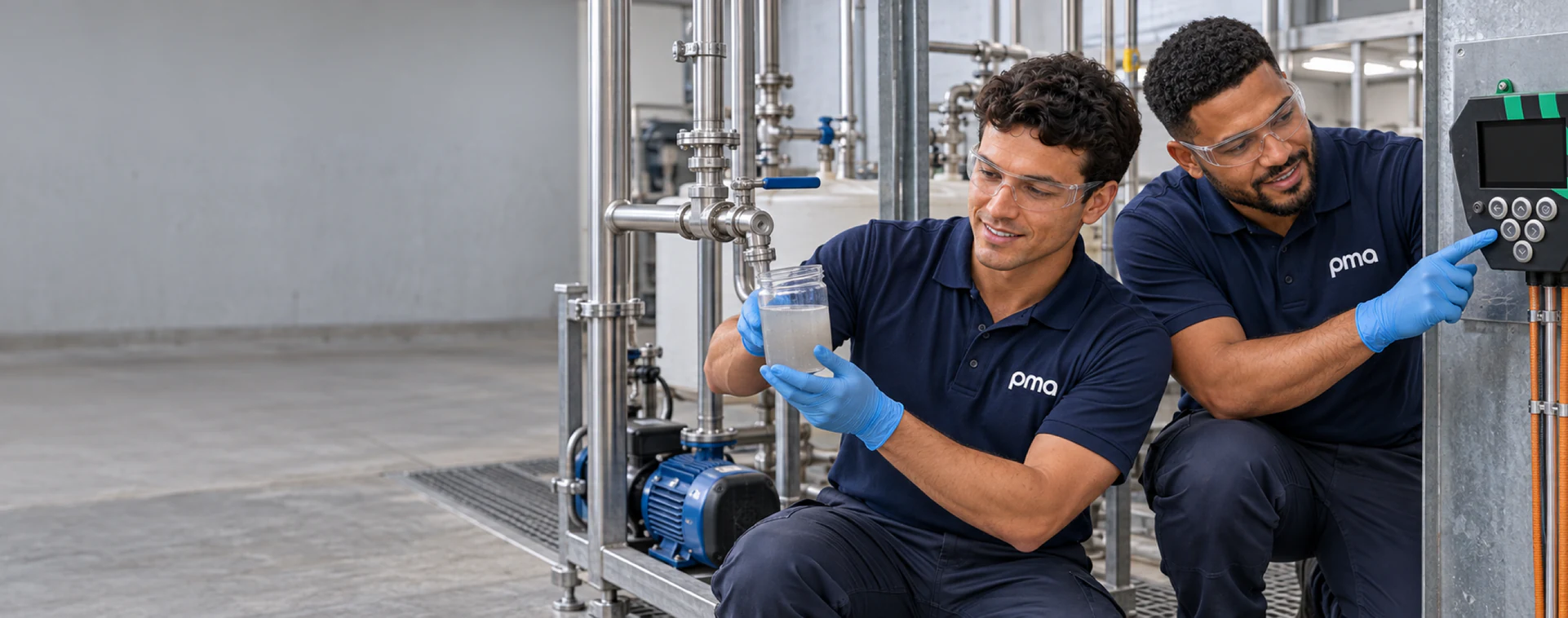
See the measurement in its process context
Application planning includes the surrounding process, safe access, representative sampling and verification—not only the analyser itself. PMA reviews these conditions together before recommending a measurement arrangement.
Define the fracturing-fluid application boundary
Separate preparation, high-pressure treatment and returns duties rather than combining them under one label.
Identify the stream
Name the fluid stage, source and destination. Record whether the duty concerns base fluid, blended fluid, proppant-bearing slurry, transfer or returns.
Define process conditions
Provide minimum, normal and maximum flow, pressure, temperature, density, suspended solids, particle size and gas conditions at the proposed point.
Define the decision
State whether data will support blending, transfer confirmation, trending, quality checks or an alarm. Maintain independent pressure and safety protection.
Fracturing-fluid measurement pathway
- Map the fluid programme. Separate each composition and operating phase.
- Select the required output. Define density, TSS or both, including units and range.
- Review installation limits. Check rating, materials, abrasion, vibration, gas and access.
- Align sampling. Establish a safe representative reference method for each relevant phase.
- Validate phase by phase. Do not extrapolate from clean water to all fluid states.
- Control configuration changes. Record formulation, calibration and maintenance changes.
Evidence to collect
Retain time-aligned analyser values, blend recipe, proppant or solids state, flow, pressure, temperature, pump status and reference results. Mark transitions and flushes clearly. Use the evidence to define which phases are valid for reporting.
Limits, compatibility and safety
A single calibration may not cover major changes in carrier fluid, additives, proppant or returned-fluid composition. Gas and incomplete pipe fill can affect ultrasonic measurements. The instrument does not replace pressure containment, well-control, hazardous-area, chemical or mechanical safeguards.
Frequently asked questions
Can one setup measure every fracturing stage?
Not automatically. Each materially different fluid system and operating phase needs review. A validated range may cover defined variations, but that must be demonstrated with evidence.
Can density be converted to proppant concentration?
Only with an agreed physical and composition basis and suitable validation. Changes in carrier fluid or entrained gas can invalidate a simple conversion.
Can the analyser be placed on a high-pressure line?
The complete installation must meet the pressure, mechanical, materials and site classification requirements. PMA must review the exact proposed duty before selection.
What reference data is needed?
Use the approved site method for density or suspended solids, sampled safely and aligned with the online reading and process phase.
Sources and engineering review scope
PMA will review the fluid stages, required outputs, pipe and pressure conditions, solids range, gas risk, reference methods and safety boundaries. This page is application guidance, not a substitute for a site survey, chemical compatibility review, risk assessment or manufacturer-approved configuration.
Related analyser range
The PMA 9600 Series is presented for slurry density and TSS duties including hydraulic fracturing fluids.
View the relevant analyser range.
Review a fracturing-fluid measurement duty
Send PMA the stream definition, fluid programme, operating envelope, pipe details and reference method before specifying equipment.