Lomond Quarry Slurry Density Monitoring Review
An independent application review for potential non-nuclear density measurement around Lomond Quarry wet-processing and process-water circuits.
Non-nuclear slurry density monitoring for Lomond Quarry in Fife
Lomond Quarry in Fife processes natural sand, gravel and blasted hard rock through an integrated crushing and washing plant. On a fully flooded pumped line, the SDM ECO can provide continuous non-nuclear density data for cyclone feed, sand-plant feed or water-recovery duties. PMA would confirm the final measurement point against the current process and operating objective.
Application note: This guide uses published process information to identify where SDM ECO measurement may be useful. PMA would confirm the current process, pipe conditions and calibration range before recommending an installation.
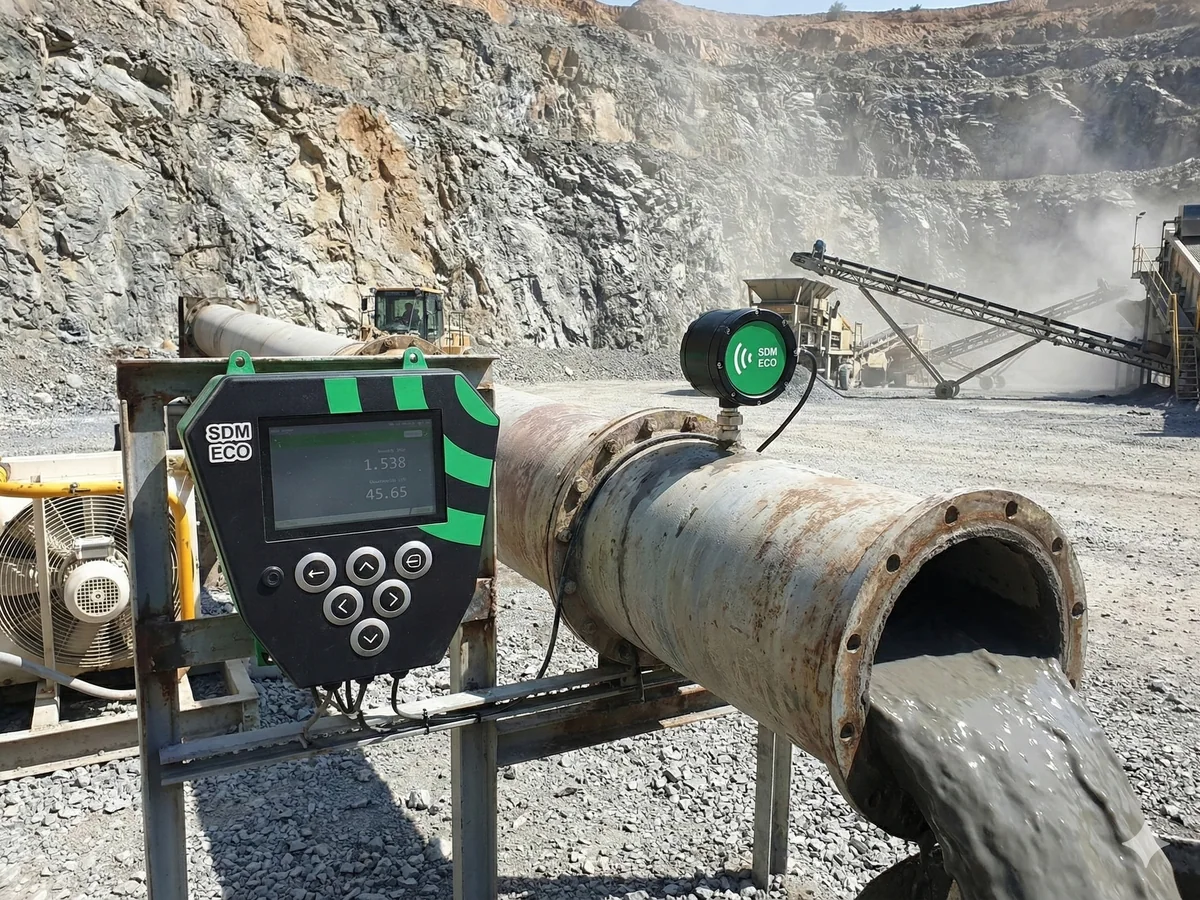
Representative Rhosonics quarry application image. It is not presented as a photograph of Lomond Quarry.
Quarry process and SDM ECO opportunities
The public process description supports a focused engineering conversation, not a pre-selected installation.
Local process and material
Public sources describe whinstone and dolerite together with sand-and-gravel overburden, washing, dewatering and process-water recovery.
Where SDM ECO can help
A candidate review could examine cyclone feed, sand-plant feed, thickener or recovered-water solids where a continuous density trend would support control.
What to confirm
Confirm the current flowsheet, pipe size and orientation, density range, velocity, air entrainment, solids grading and a time-aligned reference sample method.
Application considerations
Blended feed and changing fines can alter acoustic response. A stable reading is useful only when the pipe remains full and the stream represents the decision.
A practical SDM ECO review pathway
These four steps show how PMA would assess a potential SDM ECO duty, from selecting the process stream through to validating the measurement against representative site data.
1. Name the stream
Identify the precise process line and downstream destination.
2. Define the decision
State whether the value supports dilution, classification, water recovery or alarm.
3. Survey the pipe
Check full-pipe conditions, velocity, access, abrasion and entrained air.
4. Validate the signal
Compare time-aligned readings with representative samples and process context.
Where continuous density may add value
Continuous density could help operators see changes between manual samples, assess water-to-solids balance and add context to wash-plant stability. The best point depends on the current control objective and available access.
What PMA would verify on site
PMA would inspect hydraulics, settling risk, gas, abrasion, isolation, sensor fitting, cable route and safe access, then agree a commissioning plan across water, normal feed and representative material changes.
Sources and application guidance
Public facts used for this site profile are linked below. Process descriptions can change, so PMA would confirm the current flowsheet, operating range and measurement objective directly with the operator before proposing hardware.
Continue exploring
Return to the UK quarry application library, review mining slurry measurement guidance, or see the SDM ECO product page.
To contact us, or to request a callback, simply use the form below and we will promptly get back to you.
We greatly value all of the inquiries which our products and services generate and we are very confident that we will have the right solution available for you at the first point of contact when you reach our experienced team of engineers.

Estamos aquí para ayudar.
Tanto si necesita que le devolvamos la llamada como si tiene alguna pregunta técnica compleja, nuestro equipo de expertos está siempre a su disposición. Nuestro objetivo siempre ha sido ofrecer un servicio al cliente de primera clase.