Linhay Hill Quarry Density Monitoring Review
A non-nuclear density review for hydrocyclone, sand and process-water duties at Linhay Hill Quarry.
Limestone slurry density monitoring at Linhay Hill Quarry in Devon
Linhay Hill Quarry near Ashburton, Devon processes limestone through washing, dual hydrocyclones, rinsing and sand recovery. The SDM ECO can provide continuous non-nuclear density measurement on a suitable hydrocyclone feed, helping operators see changes in solids loading alongside pressure and flow. PMA would confirm pipe fill, velocity, abrasion and the representative operating range.
Application note: This guide uses published process information to identify where SDM ECO measurement may be useful. PMA would confirm the current process, pipe conditions and calibration range before recommending an installation.
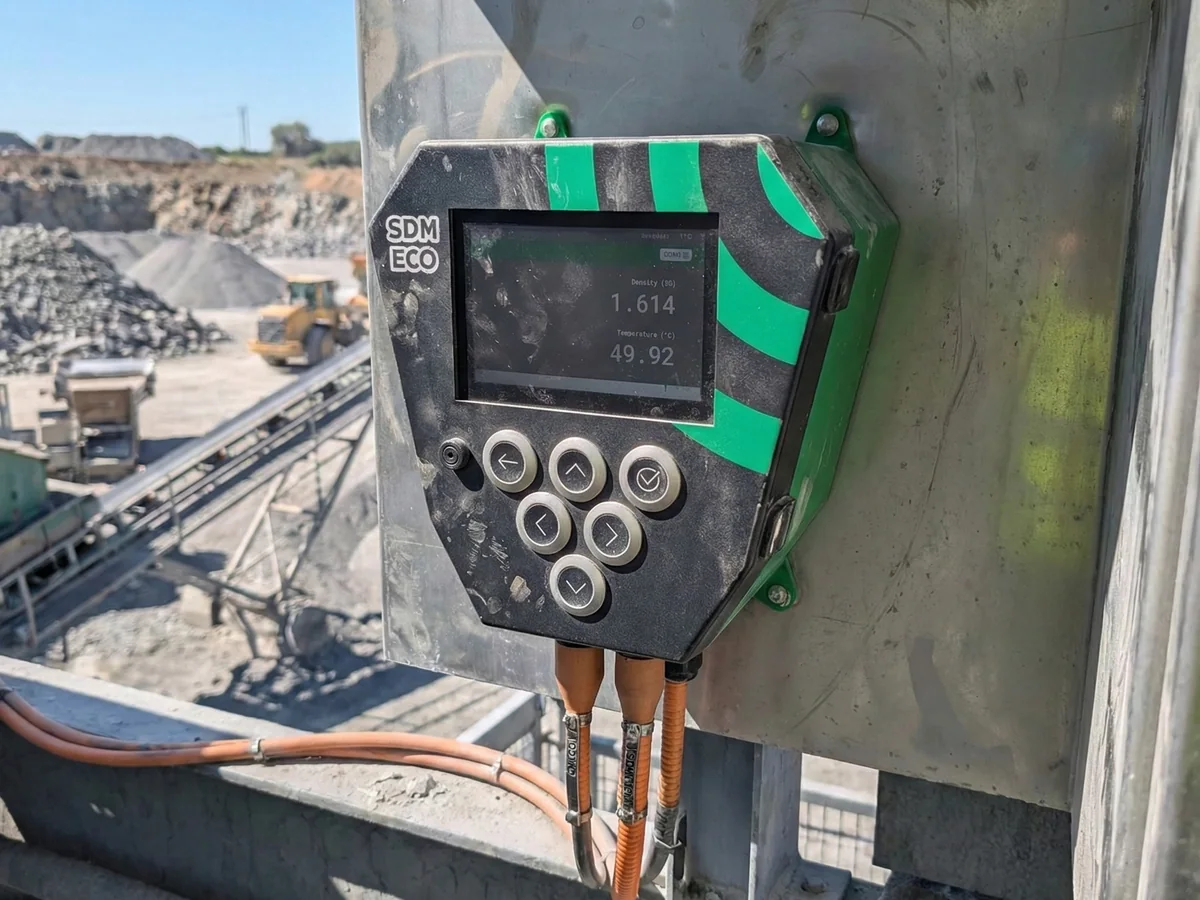
Representative Rhosonics quarry application image. It is not presented as a photograph of Linhay Hill Quarry.
Quarry process and SDM ECO opportunities
A useful measurement must be tied to a stable pumped line and an agreed control or diagnostic purpose.
Local process and material
The published plant processes Devonian limestone and produces concrete sand and clean graded aggregates, with a stated design capacity of 150 tonnes per hour.
Where SDM ECO can help
Hydrocyclone feed is a potential review point if the line is fully flooded and density can be interpreted alongside pressure and flow.
What to confirm
Record cyclone configuration, feed pipe, pressure, flow, solids range, grading, water additions and matched samples across representative production.
Application considerations
Density alone cannot determine cyclone cut size or product grading. Air, wear and changing particle distribution can change the relationship.
A practical SDM ECO review pathway
These four steps show how PMA would assess a potential SDM ECO duty, from selecting the process stream through to validating the measurement against representative site data.
1. Define cyclone duty
Name the cyclone and the process decision.
2. Pair the variables
Treat density with pressure, flow and feed grading.
3. Check the hardware
Review pressure rating, abrasion and service access.
4. Commission as a set
Compare all signals with representative samples.
Where continuous density may add value
A validated trend could add context to cyclone loading, sand recovery and water balance and help explain changes before final product results are available.
What PMA would verify on site
PMA would inspect the high-pressure line, fitting, isolation and wear exposure and define how density, pressure, flow and sampling are time-aligned.
Sources and application guidance
Public facts used for this site profile are linked below. Process descriptions can change, so PMA would confirm the current flowsheet, operating range and measurement objective directly with the operator before proposing hardware.
Continue exploring
Return to the UK quarry application library, review mining slurry measurement guidance, or see the SDM ECO product page.
To contact us, or to request a callback, simply use the form below and we will promptly get back to you.
We greatly value all of the inquiries which our products and services generate and we are very confident that we will have the right solution available for you at the first point of contact when you reach our experienced team of engineers.

Estamos aquí para ayudar.
Tanto si necesita que le devolvamos la llamada como si tiene alguna pregunta técnica compleja, nuestro equipo de expertos está siempre a su disposición. Nuestro objetivo siempre ha sido ofrecer un servicio al cliente de primera clase.