Arclid Quarry Slurry Density Monitoring Review
A measurement review for sand slurry transfer and water-to-sand ratio control around the Arclid Quarry processing system.
Silica sand slurry density monitoring at Arclid Quarry in Cheshire
Arclid Quarry near Sandbach, Cheshire transfers silica sand slurry to its processing plant and uses water-to-sand ratio control. On a representative full-pipe section, the SDM ECO can add continuous non-nuclear density data to show how the mixture changes during transfer. PMA would assess the pipe conditions, operating range and relationship with the existing control signals before recommending a duty.
Application note: This guide uses published process information to identify where SDM ECO measurement may be useful. PMA would confirm the current process, pipe conditions and calibration range before recommending an installation.
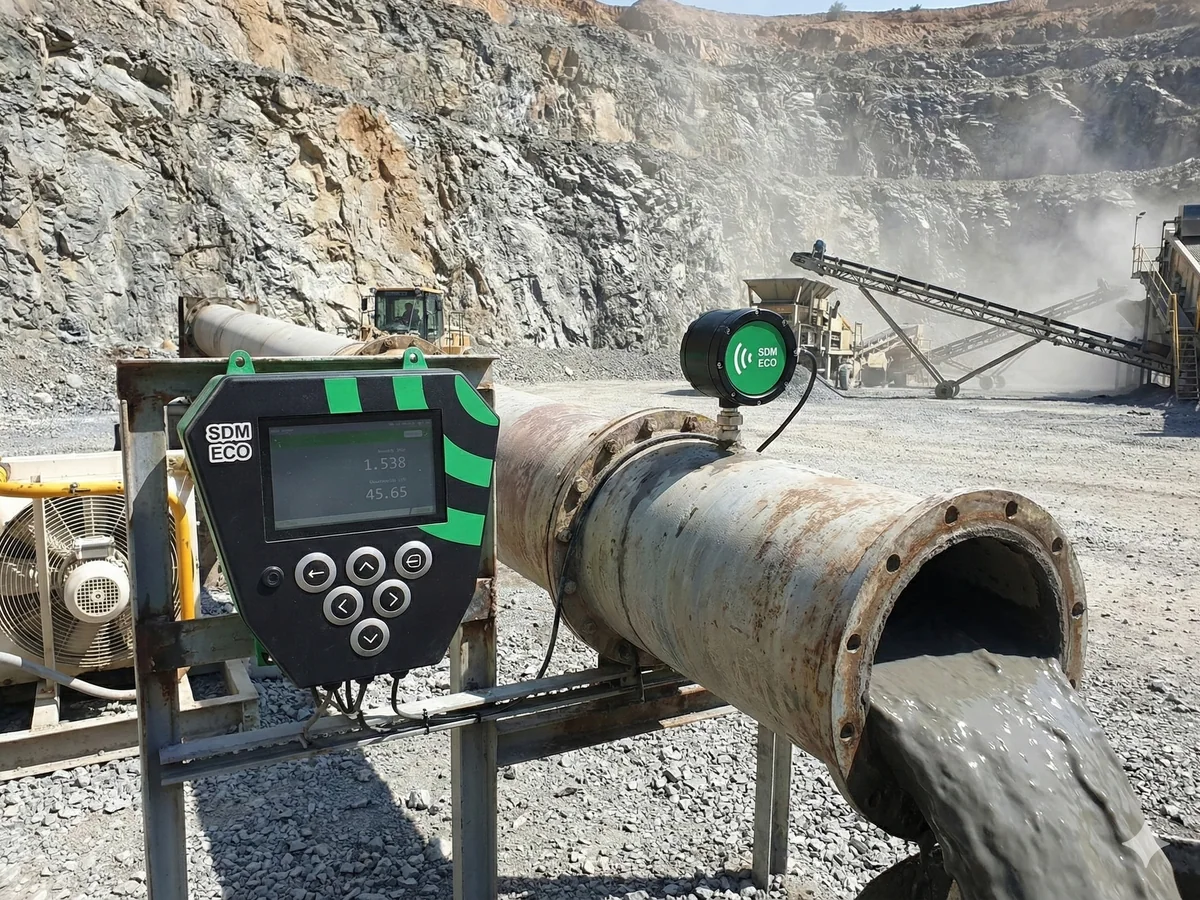
Representative Rhosonics quarry application image. It is not presented as a photograph of Arclid Quarry.
Quarry process and SDM ECO opportunities
The site’s existing automation and reference method must lead the review.
Local process and material
The public project description refers to silica sand production, slurry transfer across the site and automated control of the water-to-sand ratio.
Where SDM ECO can help
The slurry transfer line may be a candidate if it remains full, has stable flow and offers a location where density represents the mixture entering processing.
What to confirm
Confirm current pipe route and diameter, pump regime, ratio-control method, density range, sand grading, start-up conditions and time-aligned reference samples.
Application considerations
Density does not replace grading or product-quality analysis. Settling, air and changing silica feed can affect the interpretation of a single reading.
A practical SDM ECO review pathway
These four steps show how PMA would assess a potential SDM ECO duty, from selecting the process stream through to validating the measurement against representative site data.
1. Map transfer conditions
Document pump, pipe, elevation and operating states.
2. Compare control signals
Understand how the present ratio is calculated and adjusted.
3. Establish references
Take representative samples without changing the slurry.
4. Assess added value
Retain the signal only if it improves a defined decision.
Where continuous density may add value
A validated continuous trend could give operators another view of slurry consistency, help diagnose ratio changes and provide evidence during process transitions.
What PMA would verify on site
PMA would compare the proposed signal with the existing ratio-control data, check hydraulic suitability and agree how alarms or diagnostics would be governed.
Sources and application guidance
Public facts used for this site profile are linked below. Process descriptions can change, so PMA would confirm the current flowsheet, operating range and measurement objective directly with the operator before proposing hardware.
Continue exploring
Return to the UK quarry application library, review mining slurry measurement guidance, or see the SDM ECO product page.
To contact us, or to request a callback, simply use the form below and we will promptly get back to you.
We greatly value all of the inquiries which our products and services generate and we are very confident that we will have the right solution available for you at the first point of contact when you reach our experienced team of engineers.

Estamos aqui para ajudar.
Seja para solicitar um retorno de chamada ou para esclarecer uma dúvida altamente técnica, nossa equipe de especialistas está sempre à disposição. Nosso foco sempre foi oferecer um atendimento ao cliente de excelência.